Play Salamander Online
Game Info
- Platform
- TurboGrafx-16
- Genres
- Action · Shoot 'em Up
- Player Perspective
- Side view
- Developers
- Konami
- Publishers
- Konami
- Release date
- December 6, 1991
Summary
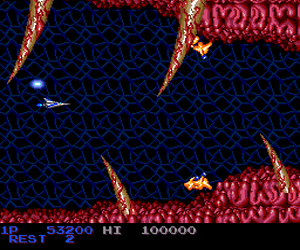
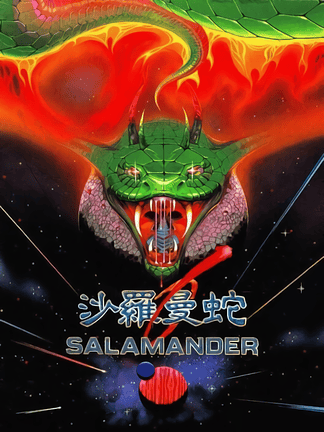
Salamander, known as Life Force in the West, feels like a love‑letter to the Gradius series while daring to break its own rules. The TurboGrafx‑16 port, which landed on the PC Engine on December 6 1991, swaps the usual Gradius checkpoint for a predefined respawn point in solo play, letting you jump back into the action without the usual back‑track. Enemy sprites zip across the screen a touch faster, and the soundtrack gets a noticeable polish that still holds up on modern headphones. The game’s hallmark—simultaneous horizontal and vertical scrolling stages—remains, as does its capsule‑based power‑up system where only the “options” survive a ship’s destruction. That PC Engine version resurfaced on Virtual Console and the TurboGrafx‑16 Mini in 2020 (included in the NA/EU bundles but omitted from the Japanese set), and it later rode the wave of compilations from the 1997 Deluxe Pack to the 2020 Arcade Archives releases.
Storyline
The TurboGrafx‑16 shooter Salamander, released in the U.S. as Life Force, drops players into the interior of a massive alien organism that’s been infected by a bacterial strain. Each level is labeled as a part of the creature’s anatomy—players navigate zones like “Enter stomach muscle zone” and confront a “Bio‑mechanical brain attack.” The accompanying anime OVA expands the lore, explaining that the crystal‑like Bacterians use a dark fog to convert inorganic matter into organic life, harvesting sentient beings to forge leaders for their space armada. In the MSX adaptation, the action is set in the year 6709 A.D. and concludes with two possible endings, depending on the player’s performance.
Edited by Maya Carter
Game Screenshots
Game Artworks
Multiplayer
- Game modes
- Single
External Links
You might also like
Super Star Soldier
1990 Shooter
Psychosis
1990 Action
J.J. & Jeff
1990 Action