Play Super Smash T.V. Online
Game Info
3.8 / 5
10 votes
- Platform
- SNES
- Genres
- Shooter · Arcade
- Player Perspective
- Top-down
- Developers
- Beam Software
- Publishers
- Acclaim Entertainment · ASCII Corporation
- Release date
- February 1, 1992
Summary
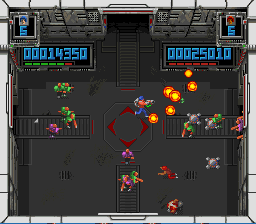
The SNES version of Super Smash TV translates the arcade’s dual‑stick chaos into the console’s four face buttons. By assigning A, B, X, and Y to eight possible firing angles, the game lets you aim independently of movement, mimicking the original twin‑stick feel without a second stick.
What’s clever is how the button layout mirrors a D‑pad, so you can sprint in one direction while blasting in another—exactly the kind of frantic control that made the arcade a classic. The adaptation feels natural, letting the frantic wave‑after‑wave action flow smoothly on the home console.
Critics seemed to agree: the SNES port earned a 92/100 score, with Electronic Gaming Monthly handing it 8‑10‑8‑9 across its reviews, and Mean Machines giving a matching 92%. Total! even placed Super Smash TV at 51st on its Top 100 SNES Games list, cementing its reputation as one of the system’s standout shooters.
Storyline
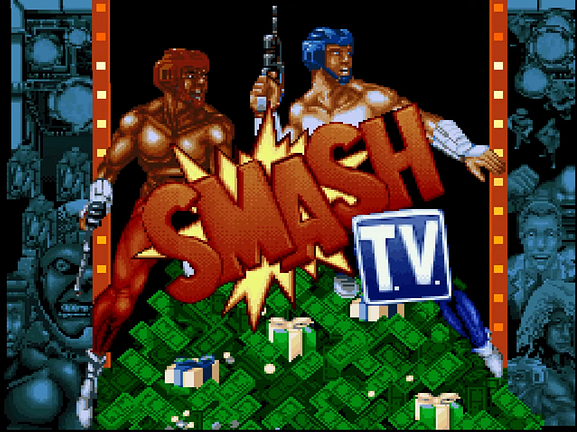
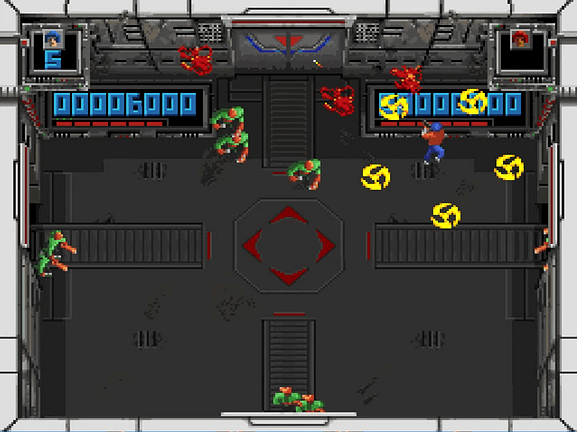
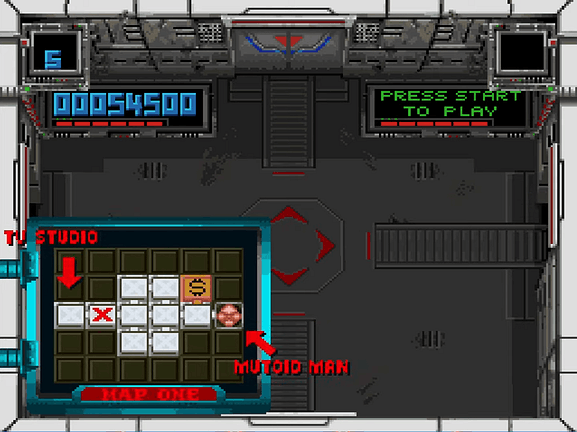
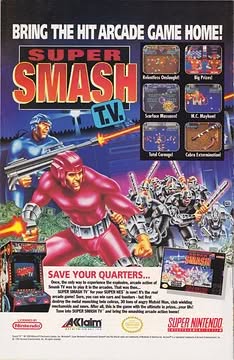
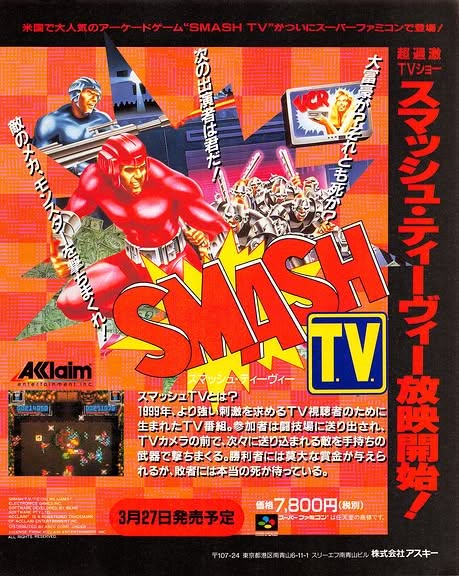
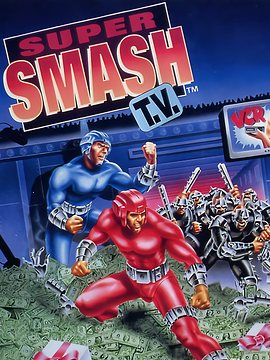
Super Smash TV drops players into a dystopian television game show set in the near‑future year of 1999. One or two contestants blast waves of attackers while gathering cash, VCRs, toasters and other prizes, plus temporary power‑ups. After clearing an arena the players pick an exit that leads to another room, and one of those rooms houses the end‑of‑level boss.
The game can be played cooperatively, but at the end of each level the player who has collected the most money receives an extra reward. A later bonus feature lets players find hidden keys throughout the stages to unlock the secret "Pleasure Dome". The difficulty is high and the arcade version leans on the classic "pay‑to‑continue" mechanic.
Its aesthetic borrows heavily from the 1987 dystopian films RoboCop and The Running Man, and a sadistic host narrates the action with lines like "Total carnage! I love it!" and "Big money! Big prizes! I love it!"—the former phrase even became the title of the 1992 sequel, Total Carnage.
Edited by Maya Carter
Game Videos
Game Screenshots
Game Artworks
Alternative Titles
- Smash TV Short
- Smash T.V. Stylized
External Links
You might also like
Derby Jockey: Kishu-ou he no Michi
1994 Sports
Super Probotector: Alien Rebels
1992 Action