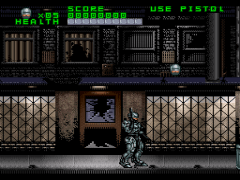
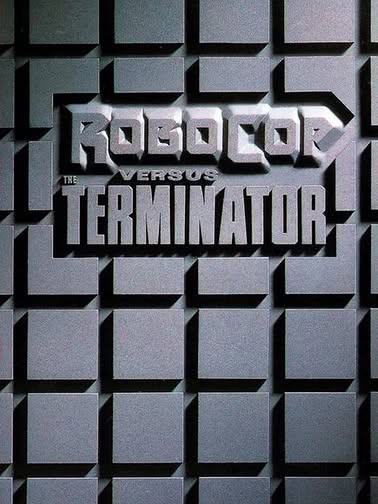
Play RoboCop Versus the Terminator Online
Game Info
2.5 / 5
2 votes
- Platform
- SNES
- Genres
- Action
- Player Perspective
- Side view
- Developers
- Interplay
- Publishers
- Virgin Interactive Entertainment
- Release date
- November 1, 1993
Summary
RoboCop Versus The Terminator landed on the SNES (as well as Genesis, Master System, Game Gear and a later Game Boy port) as a bold run‑and‑gun crossover that tried to blend two iconic sci‑fi franchises. Virgin Games secured the license and handed the project to lead designer and coder John Botti, who worked alongside Tim Williams to shape the game’s look and feel. A standout mechanic was the “vectored bullets” system, a nod to the fast‑paced shooting of Contra III, which gave the side‑scroll action a slightly more tactical edge.
The title leaned heavily on comic‑book‑style cinema sequences, a design choice that reviewers highlighted as fresh for the era. Electronic Gaming Monthly gave it a middling 5.8 / 10, praising the visual flair but criticizing the overall intensity, while Computer and Video Games awarded a high 93 / 100, showing how polarising the experience could be. Despite the split opinions, the game remains a curious artifact of early‑90s licensed gaming, remembered for its ambitious mash‑up and its daring attempt to marry two very different universes in a single cartridge.
Storyline
In the future, the human soldiers of John Connor’s resistance are losing a war against Skynet and its robot forces. They discover that Skynet’s foundation technology is the cybernetics used to create the cyborg police officer RoboCop, so the resistance sends Flo back in time to destroy him and halt Skynet’s rise. Skynet learns of the time‑travel attempt and dispatches Terminators to stop Flo. In RoboCop Versus the Terminator (often called RoboCop vs. Terminator), RoboCop eventually meets Flo and together they battle Terminators, OCP forces, and various obstacles. While investigating an OCP building, RoboCop plugs into a console to reprogram security, only to fall into a trap that digitizes his mind as his body is disassembled for Skynet’s use. From this digital state he watches Skynet come to power, then hijacks an abandoned robotics factory, rebuilds his physical form, and destroys the Skynet CPU. With the AI defeated, RoboCop turns his attention to helping humanity rebuild after the devastation.
Edited by Maya Carter
Game Screenshots
You might also like
Bassin's Black Bass
1994 Fishing
Taz-Mania
1993 Action