Play Lufia Online
Game Info
4.1 / 5
3 votes
- Platform
- SNES
- Genres
- Role-Playing
- Developers
- Neverland
- Publishers
- Taito Corporation
- Release date
- December 4, 1993
Summary
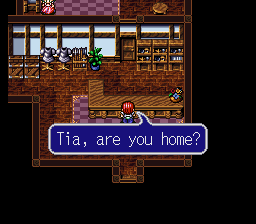
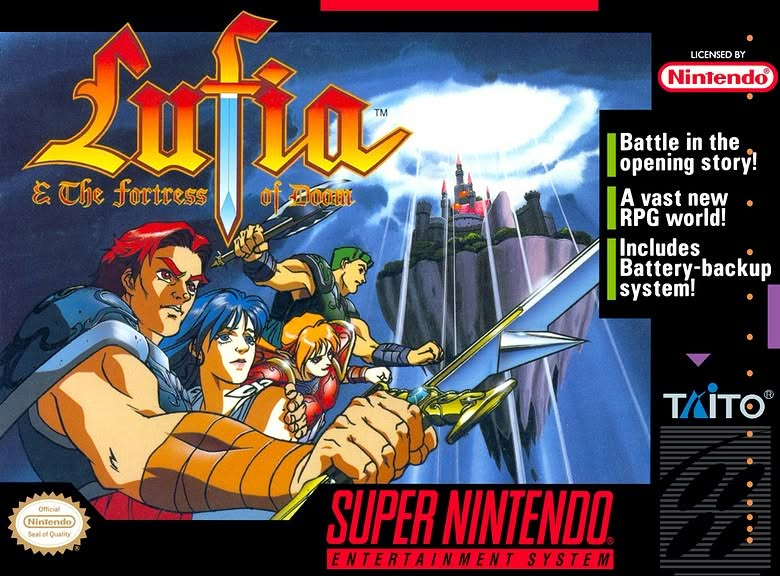
Lufia & the Fortress of Doom (often just called Lufia) launched on the Super Nintendo in the early ’90s and quickly became a fan‑favorite, even topping the U.S. sales charts in February 1994. The game blends classic top‑down exploration with turn‑based battles that shift to a first‑person view, letting you feel like you’re peering down the barrel of a cannon as you trade blows.
One of the quirkiest bits of its combat is the “double‑hit” mechanic: if you order two characters to strike the same foe and the first one lands the killing blow, the second still aims at the now‑defeated enemy and misses. It forces you to plan attacks carefully, a little nod to the old Dragon Quest style that still feels fresh. Gear and healing items are scattered in chests or bought from town vendors, and you save your progress by talking to a priest in any of the many churches.
Critics loved it at launch—Electronic Games gave it a 93% score, GamePro praised its graphics and sound, and it was a runner‑up for their 1993 RPG of the Year. Over the years opinions have split, with some praising its story and characters while others compare it unfavorably to contemporaries like Secret of Mana or the Final Fantasy series. Still, for anyone who grew up on SNES RPGs, Lufia remains a memorable slice of retro gaming history.
Storyline
The ancient prophecy of the Lufia world foretold a massive floating island with a castle that would appear in the sky, known as the Fortress of Doom. It served as the base for the four god‑like Sinistrals, who intended to subjugate the world. Four heroes—Maxim, his wife Selan, the elf Artea and the strongman Guy—entered the fortress, destroyed the Sinistrals and escaped as the island began to crumble. Maxim and Selan were trapped on a shattered chasm and were presumed dead when the island crashed. Peace lasted for ninety years before the Sinistrals returned.
The game, Lufia & the Fortress of Doom, begins nine years after that peace. The player controls a red‑haired boy, a descendant of Maxim, raised in Alekia and named by the player. He is joined by his childhood friend Lufia, who wields wands, flails and even frying pans. When the Sinistral Gades attacks a northern kingdom, Lufia intervenes and the pair team up with the Lorbenian commander Aguro. Their goal becomes finding the surviving members of Maxim’s original party.
Guy, now too old, dies at the shock of the Sinistrals’ return, while Artea, still alive thanks to his elven longevity, hands his bow to the half‑elf Jerin. The new party seeks the Dual Blade, the sword Maxim once used, unaware that it was forged by the Sinistrals themselves. Their search leads them to an underwater fortress where they confront Amon and Daos, who reveal that their sister Erin was revived thirty years earlier. The Dual Blade reacts, awakening Lufia’s true identity as Erin, and she briefly joins the Sinistrals.
The hero, Lufia, Aguro and Jerin defeat Gades, Amon and Daos, and manage to sway Erin back to her Lufia persona as the four Sinistrals fuse into a final monstrous entity. After a hard‑won victory, the Fortress collapses again and Lufia chooses to stay behind. She later returns, having lost all memory of her past lives, and the hero decides to remain with her and help her build a new future.
According to thegamesdb, the adventure even lets you travel through time to fight the Sinistrals in the past before returning to the present with Lufia and two allies. The land is larger than most RPGs, and the ultimate balance of fate hinges on a contest of love and betrayal that could destroy everything.
Edited by Maya Carter
Game Screenshots
Multiplayer
- Game modes
- Single
Alternative Titles
- Biography of Estpolis Alternative