Play Last Bible III Online
Game Info
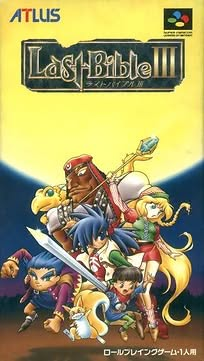
4 / 5
1 vote
- Platform
- SNES
- Genres
- Role-Playing
- Developers
- Multimedia Intelligence Transfer
- Release date
- March 4, 1995
Summary
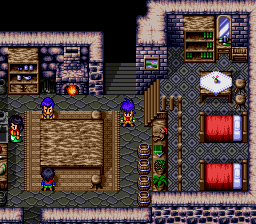
Last Bible III dropped on the Super Famicom on March 4, 1995, marking the series’ first step away from handhelds. The game lets you wander a sprawling world, swapping between party members to issue commands from a menu—whether swinging a sword, casting element‑specific spells, or even chatting with a monster to try and recruit it. As you rack up experience and cash, you can spend points on attributes like speed to act earlier in combat, and stock up on armor, weapons, and items at scattered shops. A unique "Combine" magic lets you fuse two allied monsters into a brand‑new, more powerful creature, while a conversation gauge tracks how your dialogue choices sway monster attitudes. Hiroyuki Yanada’s soundtrack even throws in a breezy bossa‑nova vibe, and Famitsu gave the title a respectable 29/40, praising its graphics while noting some of the monster designs look oddly quirky.
Storyline
Last Bible III follows Ciel, a young boy who leaves his hometown to embark on a journey. He lives a peaceful life, playing with friends and his brother while attending school to learn how to wield gaia, a supernatural form of energy.
The game takes place many years after Last Bible II, in a world where people coexist relatively harmoniously with beasts. In the opening, war hero Alek Messena reaches the gates of the underworld, collapses, and hopes his old friend Glen Larsford will survive. The player begins as Glen’s son Ciel, and the lingering memory of the devastating Polisian War—ended about fifteen years ago— is occasionally mentioned.
Ciel discovers that the united Polisian States are pushing a gaia‑prohibition law, promising free energy from the perpetual Phelesteau engine on the condition that gaia never be released within city limits. After soldiers attack his village to kill his father, Ciel is forced to uncover the mystery linking Glen, Alek’s former team, the Phelesteau engine, and the Polisian States.
Edited by Maya Carter