
Play Final Fantasy VI Online
Game Info
3.1 / 5
5 votes
- Platform
- SNES
- Genres
- Role-Playing
- Developers
- Squaresoft
- Publishers
- Squaresoft
- Release date
- April 2, 1994
Summary
Final Fantasy VI, released in the West as Final Fantasy III, stands out as the last main‑line Square title to use 2D sprites before the series leapt to 3D. The game’s development was a true team effort: about thirty staff members split duties between Yoshinori Kitase (event production and scenario) and Hiroyuki Ito (battle design), while Hironobu Sakaguchi acted as producer. Character concepts came from across the team—Terra and Locke from Sakaguchi, Celes and Gau from Kitase, Shadow and Setzer from Tetsuya Nomura, and Edgar and Sabin from Kaori Tanaka—giving the roster a genuine ensemble feel.
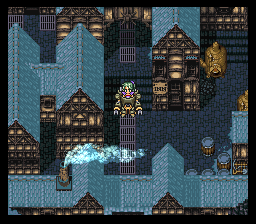
Gameplay blends the classic Active Time Battle system with a fresh Relic system that lets any character equip powerful accessories, and magic becomes widely accessible through magicite‑containing Espers. The overworld, towns, and dungeons all make heavy use of Mode 7, giving the map a pseudo‑3‑D look that was unprecedented for a SNES RPG. Puzzles sometimes require splitting the party, reinforcing the idea that every hero matters.
Nobuo Uematsu’s score is a masterclass in leitmotif, from the operatic "Aria di Mezzo Carattere" to the 17‑minute "Dancing Mad" finale. The soundtrack was released on multiple CDs, and the North American album was titled "Final Fantasy III: Kefka's Domain."
The original localization by Ted Woolsey trimmed dialogue, censored nudity, and softened violent language, even renaming the spell Holy to Pearl. Despite these changes, the game sold over 3.4 million copies worldwide and earned numerous awards, cementing its reputation as a watershed RPG. Its split‑world structure—World of Balance then World of Ruin—has been praised for pioneering non‑linear, player‑driven storytelling, a design cue that echoes in modern open‑world titles.
Storyline
Final Fantasy VI (often called Final Fantasy III in its original US release) takes place in a world where industrial machinery and magic coexist, divided into three lush continents in the World of Balance. The northern lands are mountainous, the southern continent is dominated by the Gestahl Empire, and the eastern Veldt is a monster‑filled wilderness. Mid‑game an apocalyptic event shatters the planet into the World of Ruin, a collection of islands surrounding a larger, scarred continent. Centuries before the story, the War of the Magi saw the Warring Triad imprison humans as Espers, then seal both the statues and the Espers themselves, causing magic to fade into myth. The Empire now exploits the weakened barrier, capturing Espers to power Magitek—machines that blend magic with technology—while the rebel Returners fight to free the subjugated lands. The tale begins in Narshe, where half‑human, half‑Esper Terra Branford is freed from a mind‑controlling slave crown and joins the Returners. She helps rescue several Espers, who transform into magicite; a reaction with the magicite Maduin restores her memory and reveals her parentage. The Empire uses Terra to reach the sealed Esper world, raises the Floating Continent, and Kefka murders Emperor Gestahl, shattering the balance of magic and destroying most of the surface. A year later Celes Chere awakens on a deserted island to find Kefka ruling as a god‑like tyrant, draining life from the world. The scattered heroes—Terra, Celes, Locke, Edgar, Sabin, Cyan, Setzer, Shadow, Relm, Strago, Gau, Mog, Umaro, and Gogo—reunite, infiltrate Kefka’s tower, destroy the Warring Triad, and defeat the mad clown. Though magic and Espers vanish, Terra survives by clinging to her human half, and the world slowly rejuvenates itself.
Edited by Maya Carter
Game Screenshots
Multiplayer
- Game modes
- Cooperative
Alternative Titles
- Final Fantasy III Old
- Final Fantasy VI Advance Alternative