
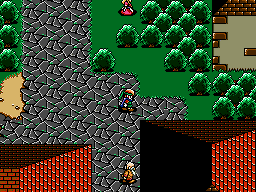
Play Madou Monogatari I Online
Game Info
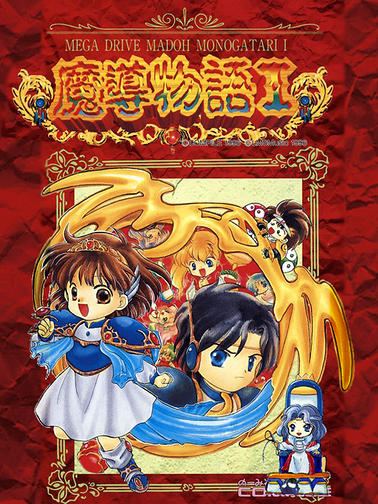
- Platform
- Sega Genesis
- Genres
- Adventure · Role-Playing
- Player Perspective
- First person
- Developers
- Compile
- Publishers
- Compile
- Release date
- March 22, 1996
Summary
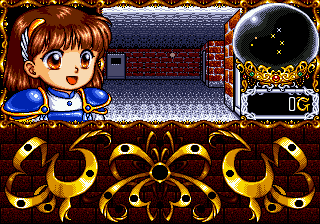
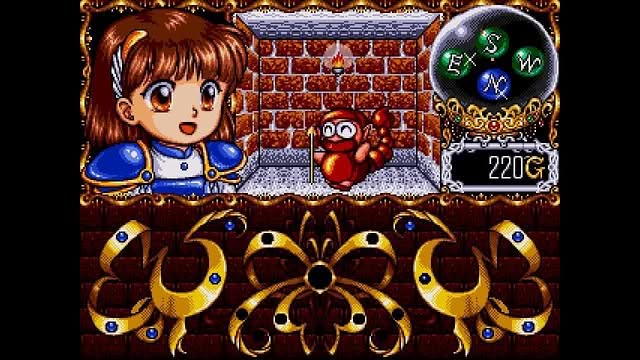
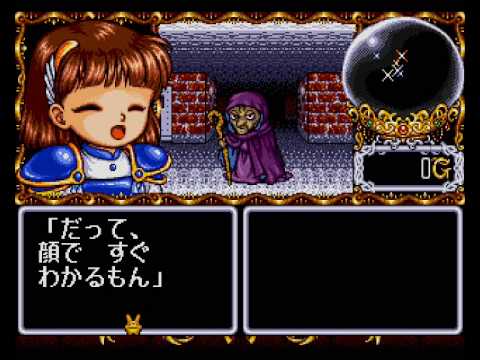
Madou Monogatari I on the Mega Drive feels like a love‑letter to early ’90s Japanese RPG quirks. The game drops you into a 3D maze where six‑year‑old Arle Nadja must climb a perilous tower, and every corridor is littered with oddball loot—think Japanese curry, a bottle of champagne, a tiny elephant, and even crystals that might summon Santa. Combat borrows the turn‑based feel of Paladin’s Quest and Phantasy Star, while a special capsule lets you capture monsters much like the later Pokémon titles, turning foes into temporary allies.
What makes this version stand out is its lineage: it’s a Mega Drive remix of the Game Gear’s Madō Monogatari I: Mittsu no Madō‑kyū, itself built on the original MSX/PC‑98 releases and flavored by the PC Engine’s Honō no Sotsuenji. This heritage shows in the puzzle‑heavy lower floors, where you need both cleverness and firepower to progress.
Curiously, the title also holds the dubious honor of being the final official Mega Drive game ever released in Japan, marking the end of an era for the console and for Compile’s long‑running Madō Monogatari series.
Storyline
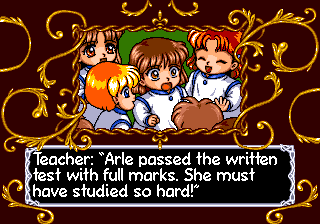
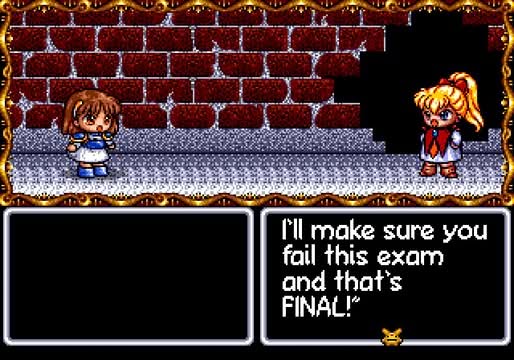
Madou Monogatari I follows six‑year‑old Arle Nadja, a bright student at a magic school, as she attempts her final exam by climbing a massive tower. She must locate three magic spheres, defeat the Cockatrice (absent from the PC‑9801 version) and finally destroy the fiend Fudoushi (called Mamono in the MSX release) to graduate from kindergarten. The tower is filled with puzzles, illusory tricks and occasional rivals, testing both her wits and her magical stamina.
In the Game Gear adaptation, a character named Camus appears and can either aid Arle—teaching her the "Bayoen" spell and handing her Dragon Horns to restore stamina—or hinder her by stealing a magic sphere after three hours of play. Camus also creates a false ending where he seems to vanish after the battle, later revealed as an illusion conjured by the Teacher. This version even offers multiple endings depending on whether Camus is healed.
The story concludes with Arle’s graduation and a brief glimpse of her growing up over the years. Notably, the PC‑98 edition features darker graphics, more realistic enemy designs, and a different final boss (Fudoushi instead of Mamono), highlighting the series’ evolving style across platforms.
Edited by Maya Carter
Game Videos
Game Screenshots
Multiplayer
- Game modes
- Single
Alternative Titles
- Mado Monogatari I Alternative
- Madou Monogatari I: 3-tsu no Madouryoku Alternative
- Madō Monogatari I Alternative