
Play Rakugaki Showtime Online
Game Info
- Platform
- PlayStation
- Genres
- Fighting
- Player Perspective
- Top-down
- Developers
- Treasure
- Publishers
- Enix · Square Enix
- Release date
- July 29, 1999
Summary
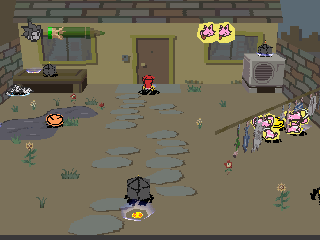
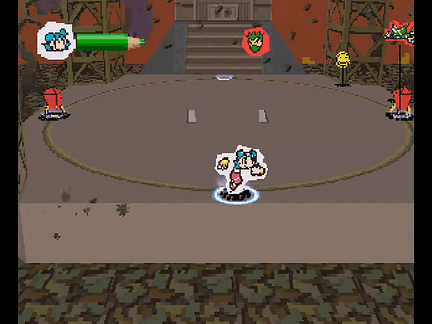
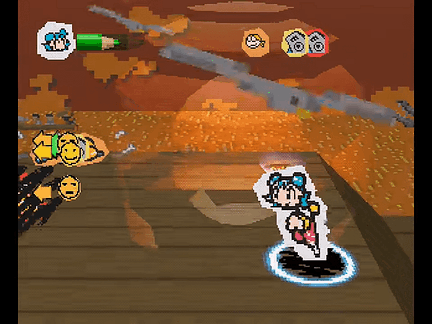
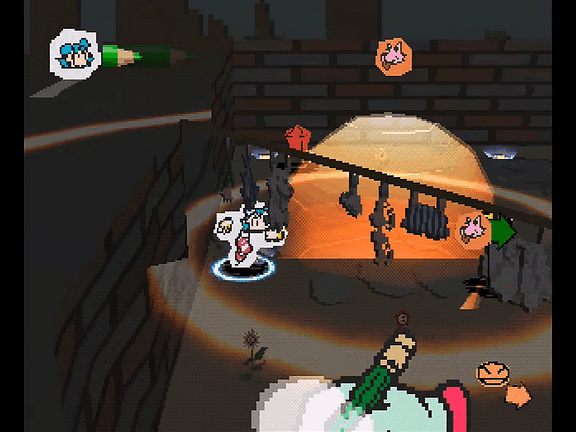
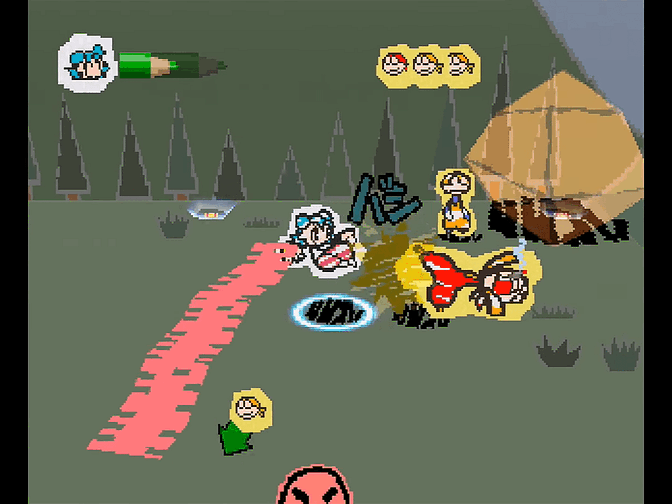
Rakugaki Showtime feels like a chaotic game of dodgeball in a 3‑D arena, where the main strategy is hurling anything you can find at opponents. The emphasis on projectile throwing gives it a kinetic, almost slap‑stick rhythm that reminds me of Poitter's Point (Poy Poy) without the usual team divisions.
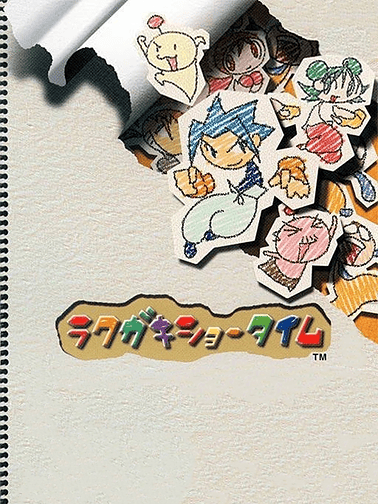
The characters look like they were sketched with crayons, which adds a whimsical charm to the 17‑person roster. Among the lineup is Marina Liteyears, a cameo from Mischief Makers, adding a quirky crossover flavor.
Treasure’s first original PlayStation effort, the title sports a soundtrack by Kenta Watanabe, who previously scored Panzer Bandit. A legal tug‑of‑war between Treasure and Enix limited its initial run, turning the game into a collector’s gem that once fetched ¥15,000. It resurfaced on the PlayStation Network’s Game Archives in 2008 for a modest ¥600, and an unreleased Tiny Toons sequel was once slated to build on its engine before being shelved and later leaked.
Critics responded positively, with Famitsu giving it 26/40, GameFan 87/100, and GameSpot a solid 7.4/10, confirming that its off‑beat formula resonated despite its niche release.
Storyline
Rakugaki Showtime drops you into an imaginary world drawn entirely with pencil by a mysterious figure known only as the God Hand. In this hand‑sketched realm the God Hand has fashioned both the heroes and their foes, giving each character a distinct line‑art look. The four members of the Heroes Team—Yukiwo, Sasami, Pitan and Tsubohachi—stand ready under the watchful eye of their creator. Opposite them, a shadowy commander called Daddy leads an army of enigmatic enemies.
The two sides are bound by a single, predetermined fate, moving like puppets on the God Hand’s stage. As the story unfolds, the Heroes and Enemies clash in a battle that promises to decide the world’s ultimate outcome. Every encounter feels like a live‑drawn sketch, with the pencil strokes dictating the flow of combat. The game’s narrative is essentially a race to the end of the line.
Edited by Maya Carter
Game Videos
Game Screenshots
Game Artworks
Multiplayer
- Multiplayer setup
- Split Screen