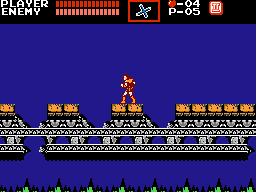
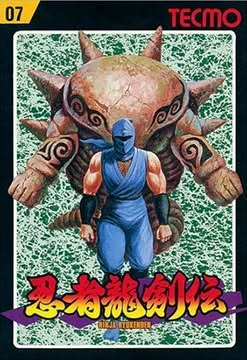
Play Ninja Ryukenden Online
Game Info
3.9 / 5
1 vote
- Platform
- NES
- Genres
- Action · Platformer
- Developers
- Tecmo
- Publishers
- Tecmo
- Release date
- December 9, 1988
Summary
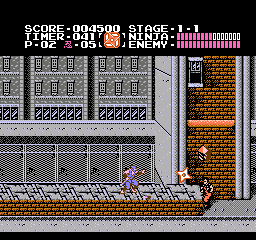
Ninja Gaiden (known in Japan as Ninja Ryūkenden) delivers a relentless side‑scrolling hack‑and‑slash experience that feels oddly modern for a 1988 NES cartridge. You guide Ryu Hayabusa with a responsive katana, toss wind‑mill shuriken that boomerang back, spin fire‑wheel projectiles, and even pull off a mid‑air "jump & slash"—all while managing a life meter and a separate spiritual‑strength gauge for special attacks. The game’s signature wall‑spring mechanic lets you bounce off vertical surfaces to reach hidden passages, and the whole thing runs on a surprisingly lean four‑frame walk cycle that keeps the action razor‑sharp.
The development team, led by Hideo Yoshizawa and featuring Masato Kato’s first full‑time design work, deliberately modeled the gameplay after Castlevania while injecting a uniquely ninja aesthetic. Ryu’s outfit was crafted to highlight his muscles, and the designers originally toyed with futuristic sensor gear before scrapping it. Yoshizawa’s obsession with challenge meant the difficulty was dialed up to "Nintendo Hard" levels, and he pioneered the "Tecmo Theater"—over twenty minutes of anime‑style cutscenes that were the first of their kind on the NES, turning narrative into a cinematic showcase.
Critics praised the title’s tight controls, atmospheric sprites, and groundbreaking storytelling, earning it Best Challenge and Best Ending at the 1989 Nintendo Power Awards and a spot atop Electronic Gaming Monthly’s Top Ten Video Games list. Its punishing difficulty sparked both admiration and frustration, cementing the game as a benchmark for hardcore platformers.
Decades later the title resurfaced on the Wii, Wii U, 3DS Virtual Console, the NES Classic Edition, and the Switch’s classic service, while a vinyl soundtrack and a novelization kept its legacy alive. Today, Ninja Gaiden is still cited as a pivotal moment when video games learned to blend fast‑paced action with true cinematic flair.
Storyline
Ninja Ryukenden (known in the West as Ninja Gaiden) opens in a retro‑futuristic 1988 where ninja Ryu Hayabusa receives a dying letter from his father, Ken, urging him to find archaeologist Walter Smith in America. After a mysterious young woman hands Ryu a demonic statue and kidnaps him, he meets Walter, who explains that two ancient statues – Light and Shadow – imprison the demon Jashin, and that the villainous Jaquio seeks to unleash it.
Walter is mortally wounded when the masked thief Basaquer steals the Shadow statue, and CIA agent Foster reveals that the Jaquio, leader of the Guardia de Mieux, plans to use the statues to awaken Jashin. Ryu is dropped by parachute into a Brazilian jungle, rescues the girl who gave him the statue, and battles the boss Bloody Malth, who confesses he once dueled Ken.
In the temple’s inner chambers Ryu frees his father from the Masked Devil’s control, watches Ken sacrifice himself to stop Jaquio, and then defeats both Jaquio and the revived Jashin. The girl, Irene Lew, chooses to stay with Ryu; they share a kiss as the sun rises over the collapsing temple.
Edited by Maya Carter