Play Mendel Palace Online
Game Info

3.1 / 5
7 votes
- Platform
- NES
- Genres
- Puzzle
- Player Perspective
- Top-down
- Developers
- Game Freak
- Publishers
- Hudson Soft · Namco · Bandai Namco Entertainment
- Release date
- July 27, 1989
Summary
Mendel Palace, released in the West as Quinty, was the very first game from Game Freak and the debut of Satoshi Tajiri, the future creator of Pokémon. The modest NES title was handled by Namco in Japan and Hudson Soft in North America, and it quietly set the stage for the monster‑catching phenomenon that would follow.
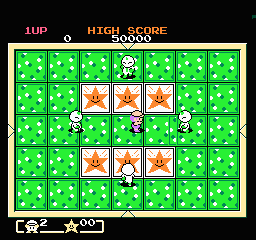
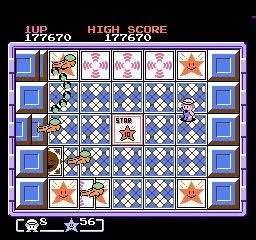
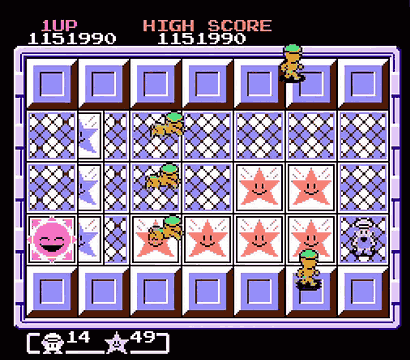
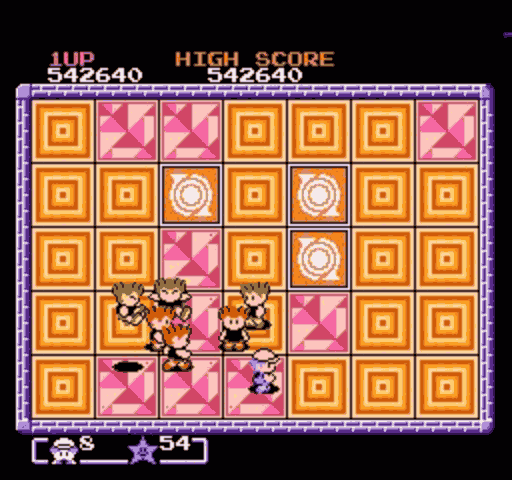
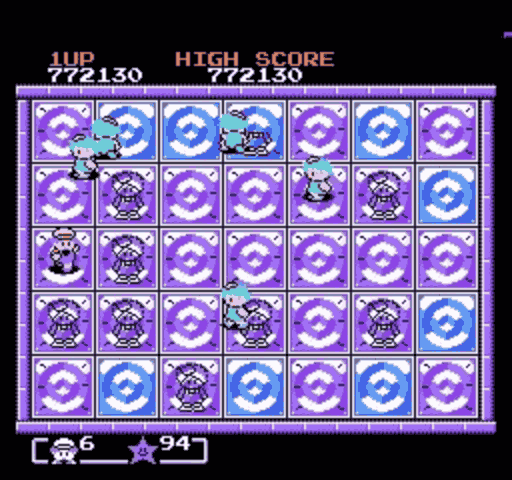
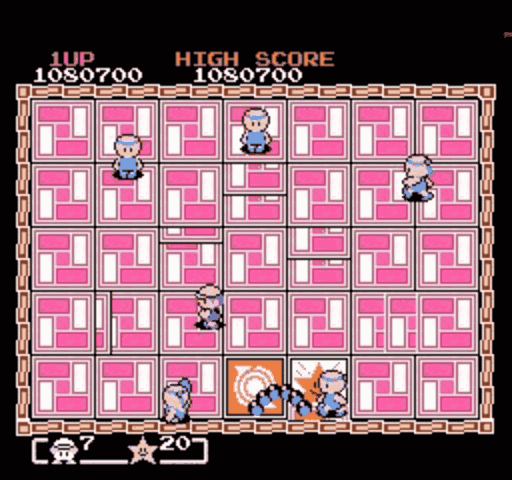
The game lets one or two players control a blue‑ and a green‑clad boy who navigate 5‑by‑7 rooms filled with wandering dolls. By flipping the tile they stand on—or an adjacent one—players can launch the dolls into walls, destroy them, or uncover hidden patterns beneath the floor. Every room must be cleared of dolls before the exit opens, and a few levels can be won by forcing a stalemate where no more flips are possible.
Each palace contains ten stages, a boss encounter, and a brief cut‑scene of the protagonist’s girlfriend being whisked away, adding a quirky narrative thread. Some rooms are shrouded in darkness, demanding careful anticipation of tile types, while special tiles like spinners or graffiti add extra tactical layers.
Mendel Palace sold roughly 68 000 copies in Japan and about 60 000 in the United States, a modest total that nonetheless proved enough to encourage Tajiri’s next venture. The game’s puzzle‑action blend and its humble success are often cited as the spark that eventually ignited the Pokémon franchise.
Storyline
Mendel Palace on the NES follows a simple rescue plot: the player’s hero must save his kidnapped girlfriend. In the American release the protagonist is called Bon‑Bon and the damsel is Princess Candy, who is trapped inside her own dream. The Japanese version swaps the names – the hero is Carton and his girlfriend Jenny has been taken by Carton’s jealous younger sister, Quinty, the titular “Mendel.” Despite the name changes, the on‑screen story and gameplay are identical in both regions. The core motivation remains the same – chase down the kidnapper and bring the girl safely home.
Edited by Maya Carter
Game Videos
Game Screenshots
External Links
You might also like
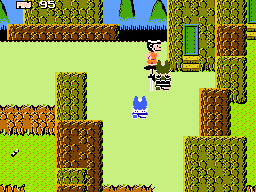
Dragon Power
1988 Action
Ultima: Warriors of Destiny
1993 Role-Playing