Play Home Alone Online
Game Info
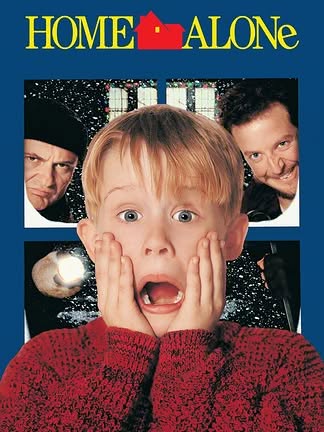
- Platform
- NES
- Genres
- Action · Platformer
- Player Perspective
- Side view
- Developers
- Bethesda Softworks
- Publishers
- THQ
- Release date
- June 6, 1991
Summary
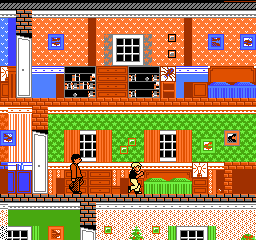
Home Alone on the NES turns the chaotic holiday film into a tense cat‑and‑mouse puzzle. You control Kevin, scrambling through the house while the bumbling burglars Harry and Marv hunt you down for a full twenty‑minute stretch.
The core of the challenge is setting traps: scattered items become improvised weapons, each with its own strength and the ability to keep a thieving intruder unconscious for longer. Timing matters—if you trigger a trap too early, the burglars recover quickly, but a well‑placed booby can buy you precious seconds.
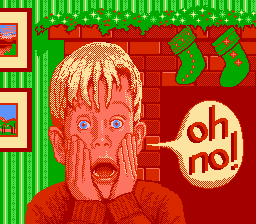
Kevin can also duck behind certain pieces of furniture, but the safety net is thin. You’re limited to two consecutive turns of hiding; linger longer and the game ends abruptly. The ending screens are a quirky nod to the movie’s iconic scream, with one version showing Kevin’s wide‑eyed “Oh no!” face and another displaying just a clouded “Oh no!” caption.
All of this is wrapped in a bright, 8‑bit aesthetic that captures the frantic spirit of the original movie while demanding quick thinking and strategic placement of every trap you find.
Storyline
Home Alone (NES) follows the same premise as the film: Kevin McCallister is accidentally left behind when his family jets off to Paris for a Christmas vacation. He must stop the bumbling burglars Harry and Marv – the infamous "Wet Bandits" – from breaking into his house.
Although several versions of the game exist, each one offers a different style of gameplay while keeping the core objective intact. In every iteration Kevin defends his home by rigging everyday household items as traps and weapons, turning the ordinary living room into a battlefield against the intruders.
Edited by Maya Carter
Game Screenshots
Multiplayer
- Game modes
- Single
External Links
You might also like
City Connection
1985 Platformer