Play Chubby Cherub Online
Game Info
- Platform
- NES
- Genres
- Action
- Developers
- Tose
- Publishers
- Bandai
- Release date
- October 29, 1986
Summary
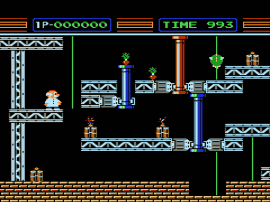
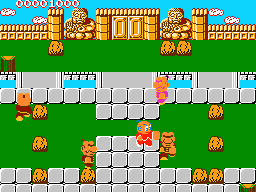
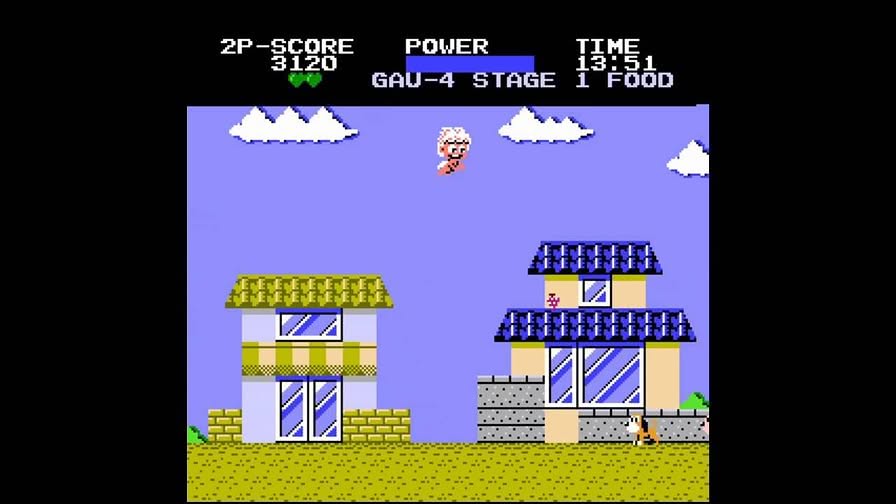
Chubby Cherub is a quirky action platformer that lets you control a cupid‑like flyer who attacks foes with heart projectiles. The game spans twelve stages, and each cleared level rewards you with a rescued friend, adding a light‑hearted sense of progress.
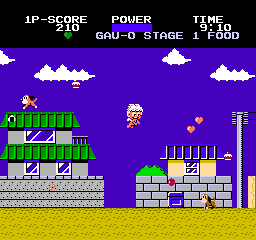
Your flight is powered by a meter that drains faster when you stay airborne; munching lollipops or other foods refills it, while lollipops also grant a rapid four‑shot burst against the canine enemies. If the meter empties, you’re forced to walk until you find more snacks.
The dogs bark first, but you can bark back to fend them off—getting hit by a bark is fatal. Notably, Chubby Cherub was one of the first third‑party titles on the NES in North America, rebranded from a Japanese manga‑based game that most Western players never saw.
Storyline
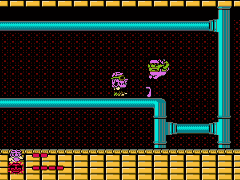
In the NES title Chubby Cherub, the protagonist’s friends are snatched by a gang of burglars, forcing the ghost‑like cherub to embark on a rescue mission. He must battle through twelve distinct levels, and at the end of each one he reunites with a rescued companion. The journey is littered with dogs, Chubby’s greatest fear, and he must shoot hearts at them before they can bark; a single bark that connects can end his quest. Chubby’s ability to fly is sustained by eating food, which fills a flight meter; when the meter empties he is forced to stay grounded. Throughout the stages he can collect cakes worth 500 points each, and strategic eating of food on the right side of a stage scrolls the heaven area, warping him farther ahead. The game features contrasting hell and heaven stages. Hell is a dark, open‑downside area where floors are invisible and Chubby cannot fly, while heaven is accessed via a smoke ring from below and is filled with abundant cakes and a scrolling mechanic that rewards continuous food consumption.
Edited by Maya Carter