Play Choplifter Online
Game Info
3.1 / 5
8 votes
- Platform
- NES
- Genres
- Action
- Release date
- June 26, 1986
Summary
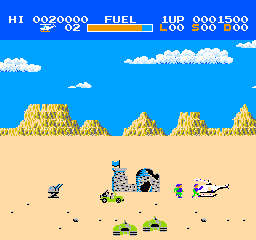
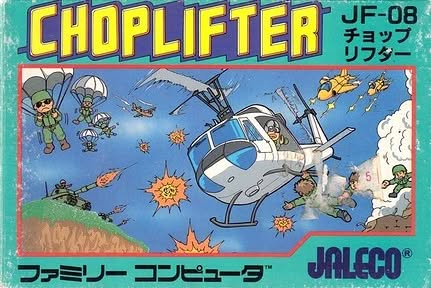
Choplifter! puts you in the cockpit of a combat helicopter that can face left, right, or forward, letting you fire in any of those directions without having to turn the craft. The forward‑facing mode is especially handy for taking out the tanks that guard the hostage buildings, while the side views let you sweep the sky for jet fighters. Each of the four buildings holds sixteen captives, and the chopper can only carry that many at once, so you’ll need several risky runs to bring everyone home.
Enemy fire is relentless: ground‑based tanks will pepper you with shells, jet fighters launch missiles and drop bombs, and an alien spacecraft swoops in as a near‑unstoppable threat. Landing too close to a hostage or blocking an exit can kill them, and friendly fire from your own guns is a constant danger, forcing you to balance aggression with precision.
Dan Gorlin designed the original in just six months, abandoning an ambitious 3D vision for a tight 2D side‑scroll after hardware limits forced a compromise. He added scenery, tanks, and planes first, tacking the hostages on at the end, and Broderbund helped tone down the flight physics when the demo proved too realistic. The game’s arcade roots survived the later NES and Master System ports, which kept the same music, environments, and overall feel while tweaking scoring for home play.
Storyline
In Choplifter for the NES, you take the seat of a combat helicopter pilot tasked with rescuing hostages held in barracks deep inside the evil Bungeling Empire’s territory. The captives are described in the backstory as delegates to a United Nations Conference on Peace and Child Rearing, and they must be ferried to a nearby U.S. Postal Service building. While you scoop them up, hostile tanks and other enemy forces fire back, forcing you to dodge and fight. The helicopter itself was smuggled into the country disguised as a mail‑sorting machine, a detail that explains the odd “mail‑sorting equipment” cover story. Your mission is to collect every delegate and deliver them safely, turning a covert rescue into a high‑octane aerial rescue operation.
Edited by Maya Carter