
Play Scurge Hive (Rising Sun) Online
Game Info
4.8 / 5
6 votes
- Platform
- Game Boy Advance
- Genres
- Action · Adventure
- Release date
- October 24, 2006
Summary
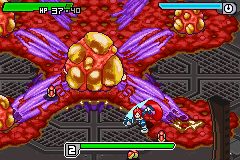
Scurge: Hive drops you into a crisp isometric world where platforming feels surprisingly deep for a handheld. I spend a lot of time swinging a mechanical tether off hooks, pulling off mid‑air jumps, and clinging to horizontal pipes or ledges to reach hidden corners. As you collect upgrades, new sections of the map unfurl, and simple environmental puzzles keep the exploration from getting stale. The game’s combat is built around a rock‑paper‑scissors loop: an electromagnetic pulse fries mechanical foes, combustion burns biological enemies, and a dissipate blast shatters energy units, each weapon also bolstering its opposite type. An infection meter constantly tracks your exposure to the Scurge; hitting 100 % triggers rapid health loss and a forced transformation that ends the run, so cleansing stations become both save points and vital healers. The GBA version earned generally favorable reviews on Metacritic, praised for its tight controls and clever blend of action and puzzle elements.
Storyline
In the Game Boy Advance title Scurge Hive (Rising Sun), players assume the role of bounty‑huntress Jenosa Arma, hired by the military for a rescue and salvage operation at Confederation Research Lab 58 on the planet Inos.
The lab has been overrun by a virulent organism called the Scurge, which mutates both living tissue and technology. Jenosa’s suit slows the infection, but she becomes infected the instant she contacts the parasite and must fight the spreading corruption while a ticking clock counts down.
The narrative follows her desperate struggle to contain the Scurge as it gradually takes over her body, ending on a cliffhanger that hints at a possible sequel.
A separate thread in the game introduces a newly awakened life form with no memories or identity, referred to as Aletha, who also seeks answers about the bioresearch facility’s experiments.
Unraveling Aletha’s origin becomes another mystery intertwined with the Scurge outbreak, adding layers to the overall plot.
Edited by Maya Carter