
Play F-Zero Climax Online
Game Info
4.7 / 5
5 votes
- Platform
- Game Boy Advance
- Genres
- Racing
- Player Perspective
- Third person
- Developers
- Suzak
- Publishers
- Nintendo
- Release date
- October 21, 2004
Summary
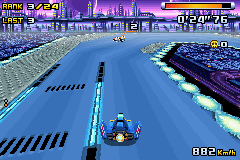
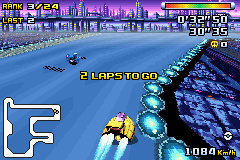
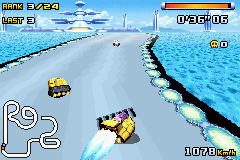
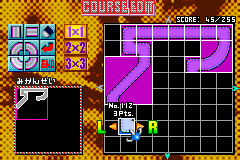
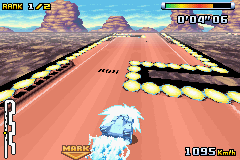
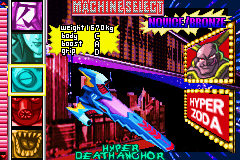
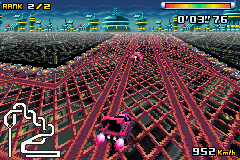
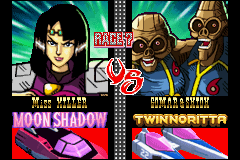
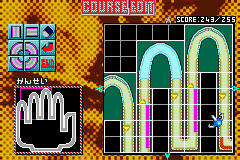
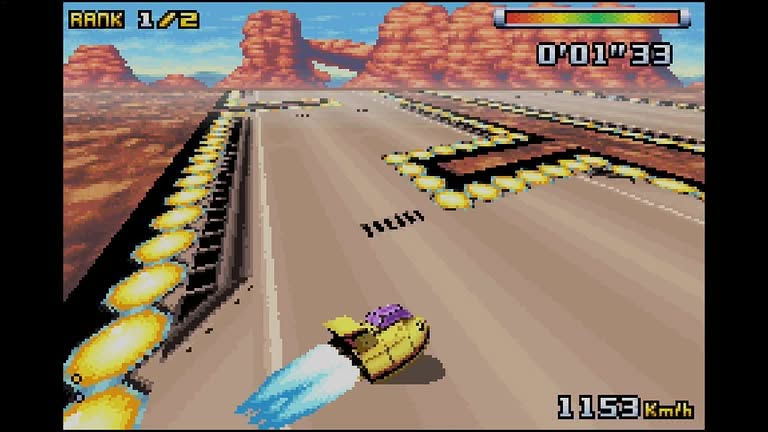
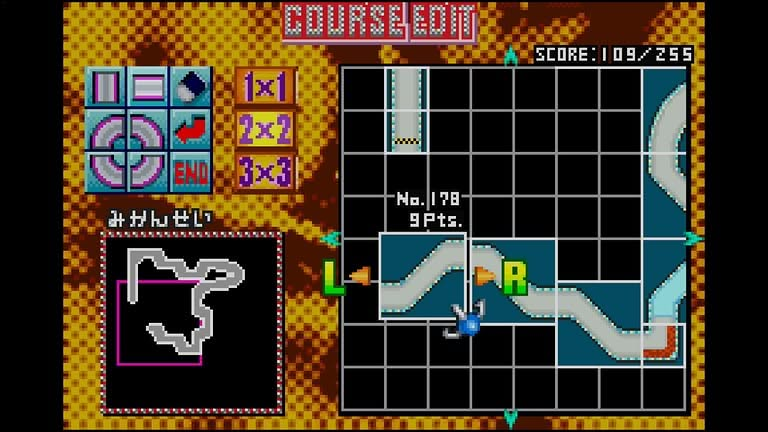
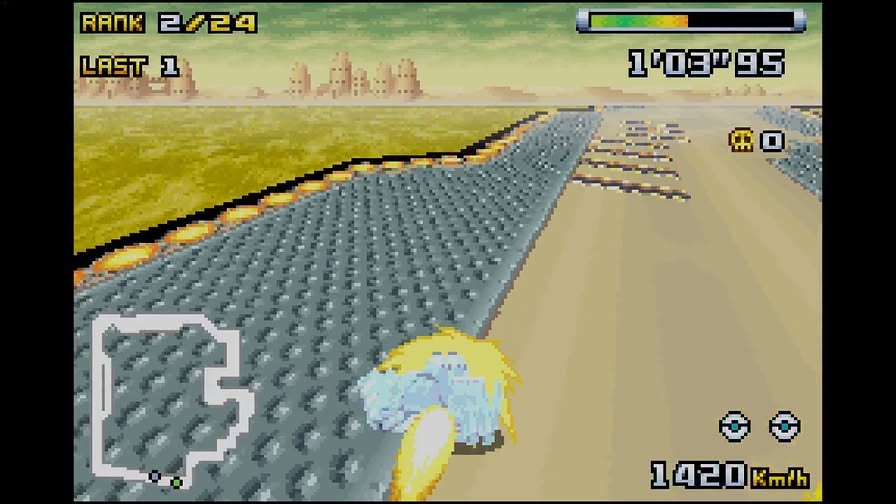
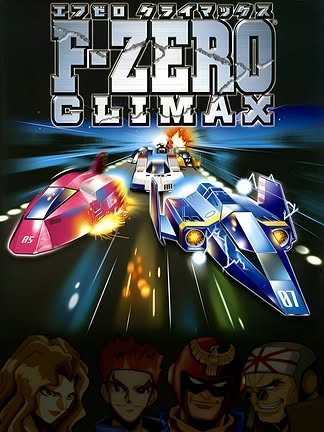
F‑Zero Climax marks the sixth entry in the series and the third on the Game Boy Advance, and it finally gives players a built‑in track editor. Up to thirty custom courses can be saved directly on the cartridge, and if the memory fills up a password can be generated to recreate the track on any other cartridge via the link cable. The game leans on the classic Mode 7‑style scaling to fake a 3‑D feel, while introducing a double‑boost system: a stored boost earned each lap can be layered on top of an energy‑draining boost for a burst of speed. Energy doubles as health, replenished by pink plates, and a new spin attack lets you spin‑out opponents even while boosting. Four preset control schemes and fully customizable button layouts let you fine‑tune the experience. Beyond the familiar Grand Prix cups—Bronze through Platinum, each with multiple difficulty tiers—the title adds Survival missions, a Zero Test time‑trial set, and a free‑form Time Attack. The editor lets you piece together track segments worth up to 255 points, then race on them yourself or watch AI competitors. Custom tracks can be shared via link cable or the password system, extending replay value far beyond the base 53 courses. Originally a Japan‑only launch on October 21 2004, the game sold just over 5 000 copies in its first three days, later resurfacing on the Wii U Virtual Console (2015) and finally reaching a global audience through the Nintendo Classics service in 2024 after an English fan‑translation appeared in 2021. Critics praised the robust editor and challenging Survival mode, but lamented the brief Grand Prix laps, recycled graphics and music, and an announcer that often over‑talks. Many felt the title feels more like an expansion pack than a true sequel, yet it remains the most polished 2D F‑Zero experience before the franchise’s long hiatus.
Edited by Maya Carter