KiKi KaiKai: Dotou-hen
1987 Shooter
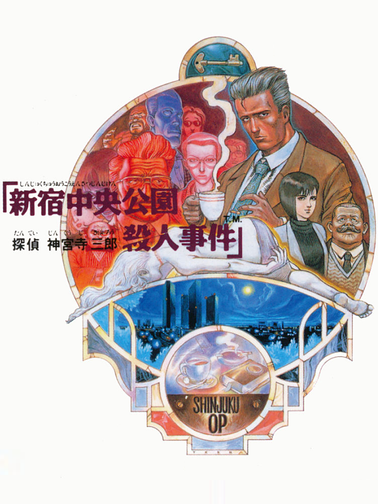
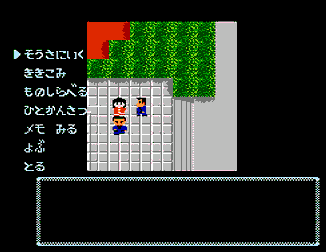
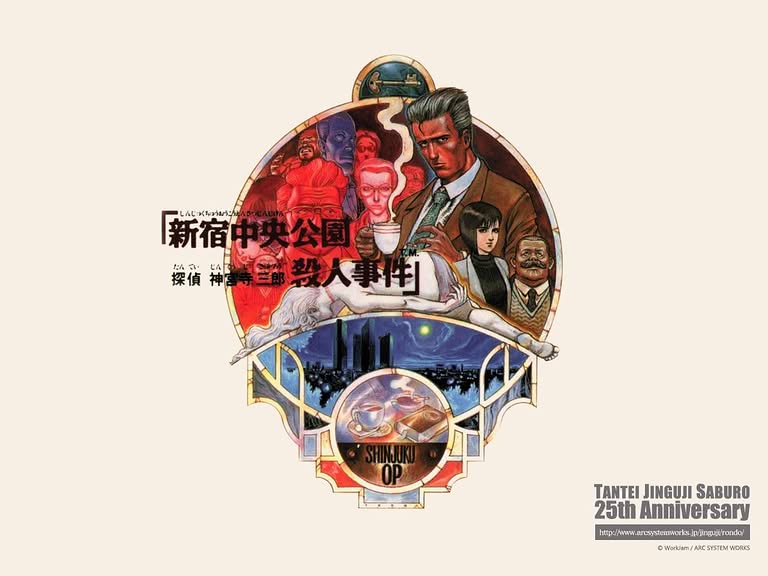
Tantei Jinguuji Saburo: Shinjuku Chuuou Kouen Satsujin Jiken (known in the West as Jake Hunter: Shinjuku Central Park Murder) feels like a gritty detective novel translated into a 1980s Famicom Disk System adventure. The game drops you into a map‑styled version of Shinjuku Central Park, where you actually move a sprite around the grounds instead of staying locked in static dialogue screens—a rarity for its era.
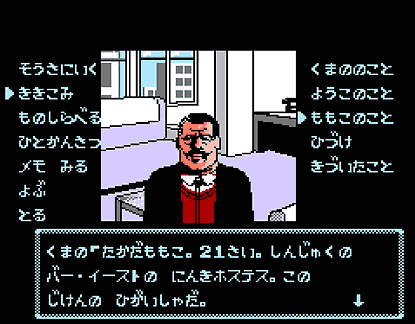
The interface is pure command‑selection: you can "Talk," "Look," "Examine" items, even "Smoke" a cigarette to trigger a thought, or "Intimidate" a suspect at the risk of a game‑over. Time is a ruthless opponent; choosing the "Pause Investigation" command advances the calendar by one day, and if you let thirty days slip by the case is closed and your progress vanishes. Certain characters only appear on specific dates, so managing the in‑game calendar becomes a strategic layer.
Audio is almost nonexistent, broken only by brief musical stings that play when a witness drops a crucial line. The art leans toward hard‑boiled realism, with character portraits rendered more like live‑action stills than the cartoonish sprites common on the NES. Even the victim’s face is never shown, adding a subtle, unsettling mystery.
A quirky bug can strand you in the office if you save the game at the wrong moment, and the "Intimidate" command can instantly land you in jail if used on the wrong person. These quirks, combined with the demanding time limits, give the title a reputation for being unforgiving yet oddly rewarding for players who love a true‑blooded detective challenge.
Tantei Jinguji Saburo: Shinjuku Chuuou Kouen Satsujin Jiken (often shortened to the Shinjuku Central Park Murder Case) opens with the discovery of a naked body in Shinjuku Central Park. The victim is identified as Momoko Takada, a popular hostess from the bar “East.” With no witnesses, Detective Saburo Jinguji is hired by his friend, Police Chief Kumano of Yodobashi Station, to solve the case.
Initial interviews reveal that Momoko had no obvious enemies, but she was involved with wealthy patron Daisuke Kashiwagi and owed a debt to the bar manager, Kiyoshi Yoyogi. Kashiwagi dies of a sudden illness on the night of the murder, and his secretary Machiko Hanazono claims she was with him in the hospital. Yoyogi disappears after being linked to a large loan from the Kanto Meiji gang. Further digging uncovers that Momoko was actually Kashiwagi’s illegitimate daughter, and Machiko was trying to secure the inheritance.
The investigation ultimately points to a tangled plot involving Momoko’s younger boyfriend, university student Ichiro Kakuhazu, and Machiko. They conspired to strangle Momoko in a hotel suite, then drop her body from a hang‑glider onto the park, hoping to leave no footprints. The plan fails when the hang‑glider crashes, a rental car is spotted, and the police finally piece together the truth.
Edited by Maya Carter
1987 Shooter
1988 Platformer
1987 Graphic Adventure
1988 Shooter