Ninja Gaiden III: The Ancient Ship of Doom
1991 Platformer
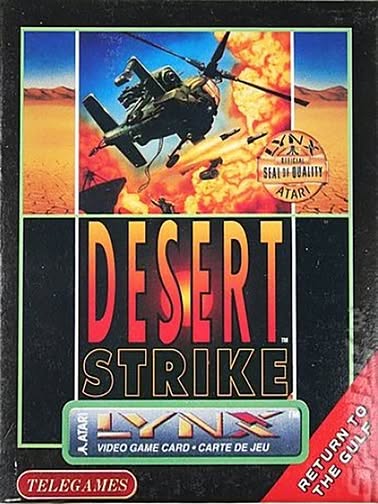
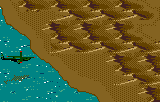
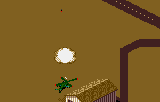
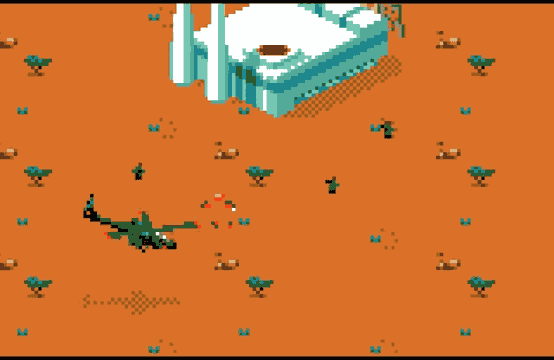
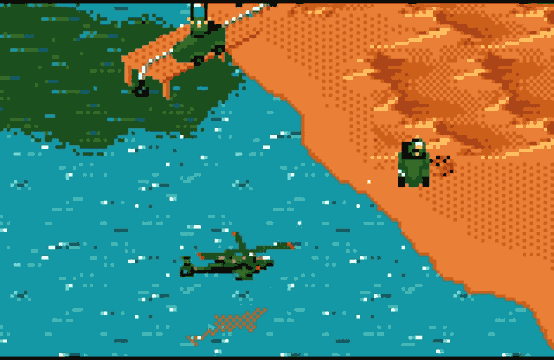
Desert Strike: Return to the Gulf drops you into an overhead, isometric battlefield where you pilot an Apache equipped with a machine gun, Hydra rockets and Hellfire missiles. The helicopter’s survival hinges on juggling three resources—fuel, ammunition and armor—each of which can be replenished by pickups or by airlifting rescued soldiers and POWs back to the landing zone. Mike Posehn’s design team gave the game a momentum‑driven camera that swings on an elliptic curve, keeping the forward view clear while preserving the toy‑like sprites that were first modeled in 3‑D and then hand‑colored. On the Atari Lynx the same mechanics survive, but the tiny screen and cramped controls make enemy silhouettes and even your own bullets hard to spot, a point noted by several reviewers. Despite the controversy over its Gulf‑War theme, the title became EA’s biggest seller at the time and spawned a string of sequels—Jungle, Urban, Soviet and Nuclear Strike—that kept the core rescue‑and‑resource‑management loop alive.
Desert Strike: Return to the Gulf opens with a self‑proclaimed general named Kilbaba invading a small, wealthy emirate in the Persian Gulf and installing himself as dictator while fortifying the region with military installations and nuclear‑weapon facilities. The United States responds by sending a single helicopter, piloted by an unnamed hero and a co‑pilot, to infiltrate and dismantle Kilbaba’s forces.
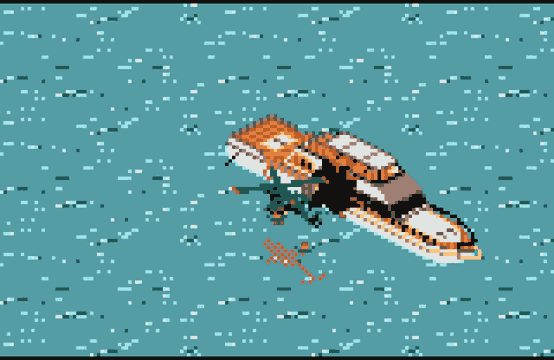
The campaign is divided into four missions. In Air Superiority the player destroys enemy airstrips and rescues a pro‑American spy. Scud Buster tasks the pilot with blowing up a chemical‑weapons plant, taking out scud launchers, and evacuating civilians and POWs. Embassy City sees the rescue of a U.N. inspection team, the destruction of a biological‑weapons plant, and the liberation of embassy hostages before a chase to Kilbaba’s guarded yacht. The final stage, Nuclear Storm, protects an oil facility, disables a nuclear plant, uncovers bombs hidden in garbage trucks, captures a scientist, and stops a bomber carrying Kilbaba, ending with the dictator’s death in a burning plane.
The ending scene places the pilot and co‑pilot on the White House Rose Garden, where President and Mrs. Bush congratulate them.
Commentators noted the plot as a thinly disguised reference to the Gulf War, likening Kilbaba to Saddam Hussein and the desert setting to Iraq.
Edited by Maya Carter
1991 Platformer
1991 Platformer
1993 Shooter
1992 Beat 'em Up