Play Trojan Online
Game Info
2.9 / 5
5 votes
- Platform
- Arcade
- Genres
- Fighting · Beat 'em Up
- Player Perspective
- Side view
- Developers
- Capcom
- Publishers
- Romstar · Capcom
- Release date
- December 31, 1986
Summary
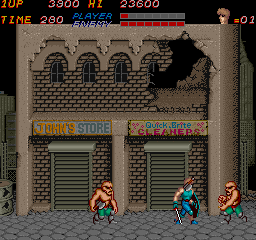
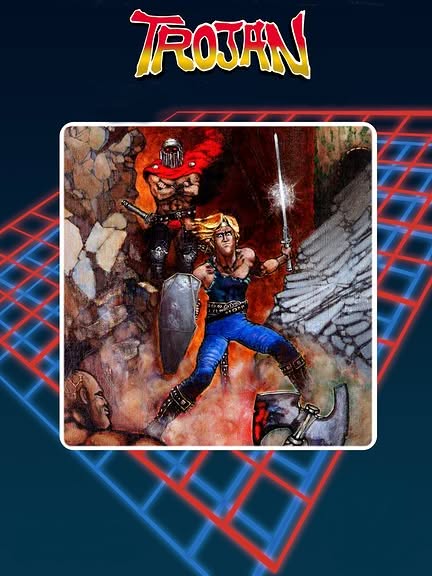
Trojan lets one or two players take turns battling through a side‑scrolling world with a surprisingly simple control scheme: an eight‑way stick and just two buttons. Holding the stick up makes the hero jump, one button swings a sword, and the other raises a shield that can be angled in any direction to block knives, arrows, or even magic balls. When a magic ball strips you of your gear, the same buttons become punches and kicks until the sword and shield reappear as floating pickups.
The game is split into six distinct stages, each peppered with ordinary foes, a mid‑stage sub‑boss, and a full‑size boss at the end. Players can begin on any stage, but to see the true ending they must defeat the final boss, Achilles, and then run through the whole run again—an homage to the looped difficulty of Ghosts ’n Goblins.
Floating hearts restore health, and special jump pads let you reach higher platforms, adding a layer of strategy to the otherwise relentless combat. Whether you continue after a game‑over depends on the arcade’s dip‑switch settings, a common quirk of the era.
Later, Trojan resurfaced in the Capcom Classics Collection Vol. 1 for PS2 and Xbox, and it earned a respectable spot as the 16th most successful table arcade unit in Japan’s May 1986 rankings. Critics praised its crisp graphics and solid gameplay, calling it a worthy spiritual successor to Capcom’s own Ghosts ’n Goblins.
Storyline
Trojan on Arcade is set in a post‑apocalyptic near‑future scarred by a nuclear war and a lingering demonic influence. The spirits of ancient warlords have risen, possessing the era’s strongest survivors—known as the "chosen"—and, under the supreme leader Achilles, they rule the remaining peaceful tribes with an iron fist. The player assumes the role of a young warrior who adopts the battle name Hero Trojan, a resistant who once served the evil regime but rebels after witnessing Achilles slaughter innocents. His quest is to infiltrate the enemy‑controlled lands, battling pirates and gladiators while exorcising the demonic spirits from their mortal hosts with his trusty sword and shield. The journey unfolds across a gothic‑industrial wasteland, where each victory chips away at the tyrannical grip of Achilles and his possessed army.
Edited by Maya Carter
Game Videos
Game Screenshots
Arcade Machine
- Developers
- Capcom
- Machine Style
- Upright
- Control Panel
- Single-player
- Input Devices
- Joystick · Buttons
- Screen Orientation
- Landscape
- Sound
- Mono
Multiplayer
- Multiplayer setup
- Hot Seat
External Links
You might also like
Magic Sword: Heroic Fantasy
1990 Platformer