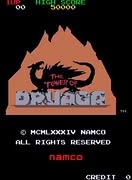
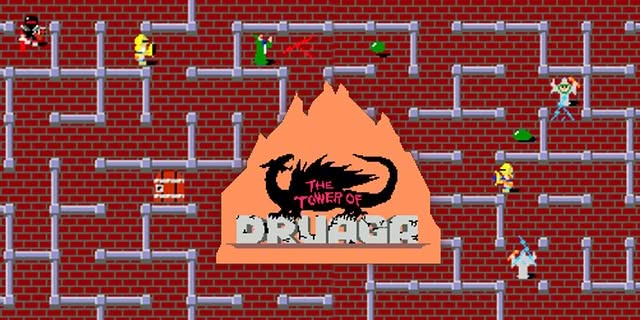
Play The Tower of Druaga Online
Game Info
3.6 / 5
9 votes
- Platform
- Arcade
- Genres
- Arcade
- Player Perspective
- Top-down
- Developers
- Namco
- Publishers
- Bandai Namco Entertainment · Namco Bandai Games · Bandai Namco Games · Namco
- Release date
- July 20, 1984
Summary
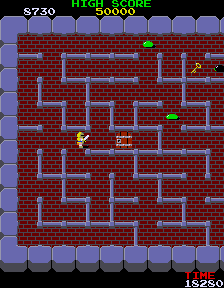
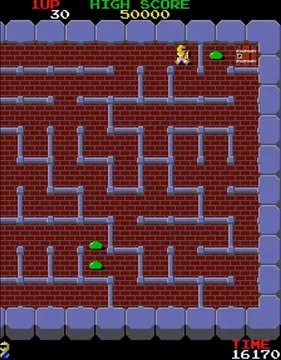
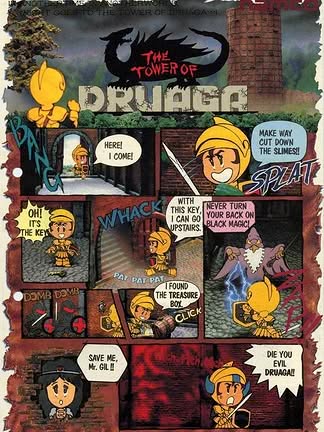
The Tower of Druaga (often just called Druaga) feels like a retro‑arcade mash‑up of maze‑chasing and sword‑play. You control the golden‑armored Gilgamesh with a simple two‑button scheme: hold the sword button to charge into enemies, and let the shield pop to the side for a brief block against magic blasts. Hidden chests appear when you meet odd conditions, and a set of wing boots on the second floor—earned only by clearing every foe—are essential for finishing the climb.
The hardware is a quirky blend: two 6809 CPUs drive the action while a Namco 8‑channel PSG handles the music, which was composed by Junko Ozawa using a custom sound driver. The arcade board itself is a modified Super Pac‑Man system that borrowed the horizontal scrolling tech from Mappy, giving the tower its smooth, side‑scroll feel.
A fun tidbit for fans of fighting games: Gilgamesh’s red‑line shield and the Blue Crystal Rod later showed up as alternate weapons for Sophitia in Soul Edge, linking this classic maze‑runner to a later generation of titles.
Storyline
In The Tower of Druaga you control the golden‑armored knight Gilgamesh, a heroic prince on a mission to rescue the maiden Ki from the demon Druaga. The eight‑armed, four‑legged demon plans to wield the Blue Crystal Rod to enslave all of mankind, so Gilgamesh must climb the 60‑floor tower, finding a key on each level to open the door ahead while battling slimes, knights, wizards, ghosts and dragons. Hidden items are essential; missing one can send him spiraling back to earlier floors. Each floor also has a time limit that summons indestructible Will‑O‑Wisps that relentlessly chase the player.
Edited by Maya Carter
Game Videos
Game Screenshots
Game Artworks
Arcade Machine
- Developers
- Namco
- Machine Style
- Upright
- Control Panel
- Single-player
- Screen Orientation
- Portrait
- Sound
- Mono
Multiplayer
- Multiplayer setup
- Hot Seat