Play The Return of Ishtar Online
Game Info
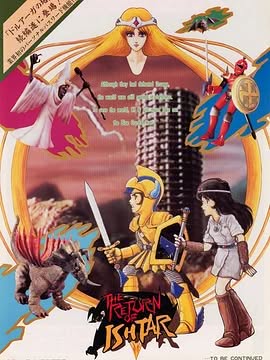
- Platform
- Arcade
- Genres
- Role-Playing · Arcade
- Player Perspective
- Top-down
- Developers
- Namco
- Publishers
- Namco
- Release date
- July 8, 1986
Summary
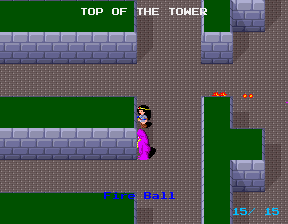
The Return of Ishtar (often called Ishtar no Fukkatsu) picks up right after Namco’s Tower of Druaga, dropping two players into a sixty‑floor, 128‑room tower that scrolls only with the priestess Ki’s movement. Ki wields magic and dies instantly on contact, while Gilgamesh, the sword‑wielding prince, slays any foe he touches but can be overwhelmed if left to fight alone. The core challenge is a tight cooperation: Ki must keep enemies at bay with ranged spells, and Gilgamesh must clear the path without getting swamped.
What really stands out to me is the arcade’s early password system, a rarity for 1986, letting us pick up where we left off without a traditional high‑score table. An easter egg even hides designer Masanobu Endō unconscious in a “Dead End” room, rescued by Ki’s Blue Crystal Rod. Though it debuted only in Japan, the game later resurfaced in Namco Museum Volume 4 and on modern consoles via Hamster’s Arcade Archives, giving a new generation a chance to experience this cooperative classic.
Storyline
The Return of Ishtar picks up right after the events of The Tower of Druaga. Gilgamesh has just rescued the maiden Ki from Druaga, and the two heroes find themselves trapped inside the tower. One player controls Ki, who fights using magic, while the other controls Gilgamesh, a sword‑wielding knight. Their mission is to descend through the tower’s sixty floors.
The duo must explore 128 rooms, battling inhabitants who seek revenge for their former master. They must avoid lethal enemies and find a way out of the tower. The game’s co‑op focus emphasizes teamwork as Ki’s spells and Gilgamesh’s blade complement each other.
Edited by Maya Carter
Game Screenshots
Arcade Machine
- Developers
- Namco
- Machine Style
- Upright
- Control Panel
- Multi-player
- Input Devices
- Joystick · Buttons
- Screen Orientation
- Landscape
- Sound
- Mono
Multiplayer
- Game modes
- Cooperative
External Links
You might also like
Märchen Maze
1988 Shooter
Chain Reaction
1995 Puzzle