Play Survival Arts Online
Game Info
- Platform
- Arcade
- Genres
- Fighting
- Release date
- October 1, 1993
Summary
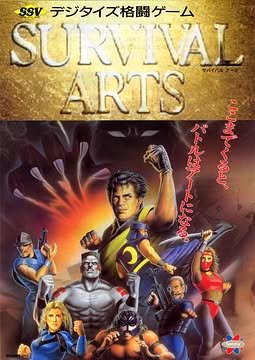
Survival Arts drops you into a gritty, digit‑digitized arena where eight fighters from around the globe battle for the secrets of a mysterious martial discipline. The game feels like a love‑letter to early ’90s fighters – its visual style mirrors the blood‑splattered realism of Mortal Kombat, while the move‑list and two‑out‑of‑three tournament format borrow heavily from Street Fighter II. What sets it apart is the on‑stage armory: swords, guns and other weapons appear as you trade blows, letting you finish a combo with a literal bang, slice or electrocution. Each fatality is over‑the‑top, ranging from disassembly to decapitation, a nod to the brutal endings of Barbarian.
The backstory hints at a hidden origin for the Survival Arts, with each combatant gradually unlocking new techniques as they progress through the tournament. A quirky Easter egg appears when the monk from Viper’s stage shows up later in Scarab’s Dyna Gear, tying the two obscure titles together. Though a Super NES and Genesis port were teased in ’94, both vanished without a trace, leaving the arcade version as the sole official release. Play Meter even logged it as the 58th most‑popular arcade cabinet of its time, proving that the game’s blend of gore, weaponry and classic fighting mechanics left a memorable mark.
Storyline
Survival Arts (the arcade fighter) centers on a mysterious origin for the powerful physical martial art known as Survival Arts. Eight warriors from different countries have each mastered key techniques, and they keep expanding their knowledge. All of them qualify for a single tournament, hoping to become the ultimate survivor and claim the hidden secrets of the art. Although the game lists nine playable characters, the storyline focuses on the eight competitors and the unknown birthplace of the discipline.
Edited by Maya Carter
Arcade Machine
- Developers
- Sammy
- Machine Style
- Upright
- Control Panel
- Multi-player
- Input Devices
- Joystick · Buttons
- Screen Orientation
- Landscape
- Sound
- Stereo
Multiplayer
- Game modes
- Versus
External Links
You might also like
Ninja Commando
1992 Fighting