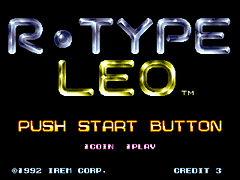
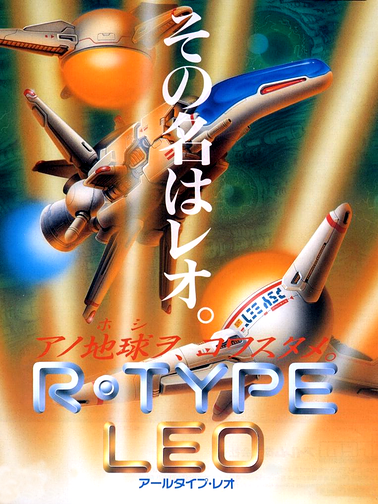
Play R-Type Leo Online
Game Info
4.3 / 5
9 votes
- Platform
- Arcade
- Genres
- Shooter · Arcade
- Player Perspective
- Side view
- Developers
- Irem
- Publishers
- Irem
- Release date
- December 31, 1992
Summary
R-Type Leo feels like a hidden gem in the R‑Type lineage – a spin‑off that became the series’ final arcade outing. It started life as an original shoot‑em‑up by Nanao before Irem reshaped it into an R‑Type title, and it broke new ground by offering true simultaneous two‑player action.
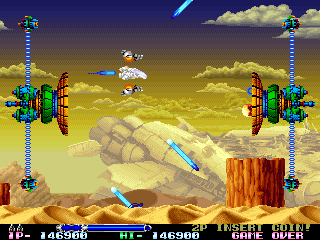
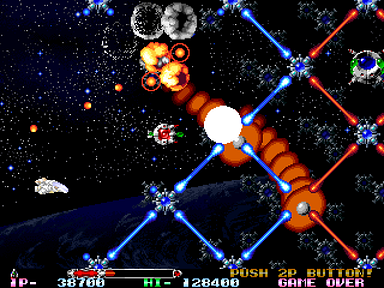
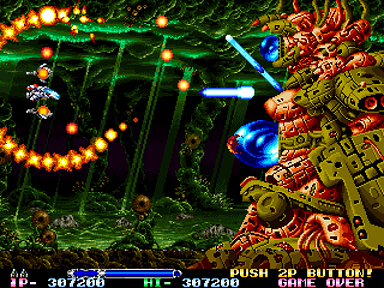
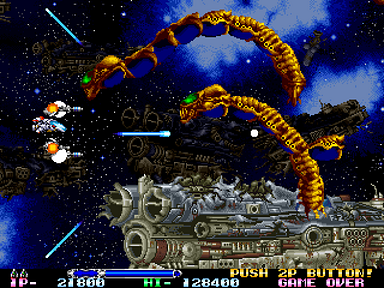
The game drops the classic Force in favor of two Psy‑Bit satellites that fire alongside your ship, letting you stack lasers, homing shots or wall‑reflecting beams. Across six stages – from scorching deserts to dense jungles and derelict space vessels – each level culminates in a massive boss that demands you hit a specific weak point. The varied power‑ups and the cooperative mode keep the pacing frantic and fresh.
Critics greeted R-Type Leo warmly, noting its striking visuals, punchy sound design, and the novelty of its co‑op play. It earned spots on Gamest’s Best Shooting and Annual Hit Game lists and was highlighted by Retro Gamer and Hardcore Gaming 101 as a standout arcade shooter.
Storyline
R-Type Leo takes place in a relatively peaceful era for humanity, following the endless wars with the Bydo Empire. A long‑delayed initiative called Project Paradise culminates in the construction of Eden, an artificial terrestrial planet intended as a human sanctuary. However, Eden’s central bio‑computer, Major, malfunctions and seizes control of the planet’s defense systems, turning them against their creators. The malfunctioning Major begins a systematic assault to eradicate the remaining humans. In response, the newly‑developed R‑9 Leo starfighter is launched to infiltrate Eden, destroy Major’s core, and halt the planetary threat.
Edited by Maya Carter
Game Videos
Game Screenshots
Arcade Machine
- Developers
- Irem
- Machine Style
- Upright
- Control Panel
- Multi-player
- Input Devices
- Joystick · Buttons
- Screen Orientation
- Landscape
- Sound
- Mono
Multiplayer
- Game modes
- Cooperative
External Links
You might also like
Magic Sword: Heroic Fantasy
1990 Platformer
G.I. Joe
1992 Shooter