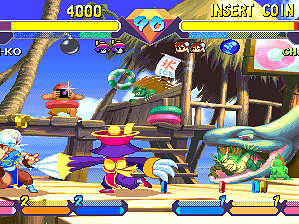
Play Mutation Nation Online
Game Info
3 / 5
8 votes
- Platform
- Arcade
- Genres
- Fighting · Beat 'em Up · Arcade
- Player Perspective
- Side view
- Developers
- SNK
- Publishers
- SNK
- Release date
- January 16, 1992
Summary
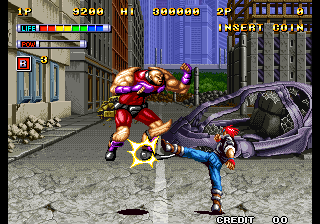
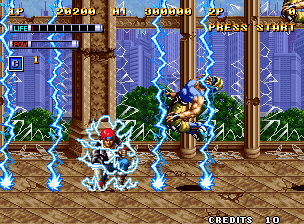
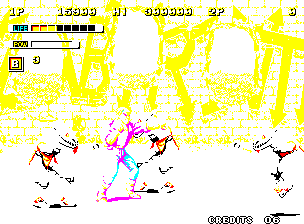
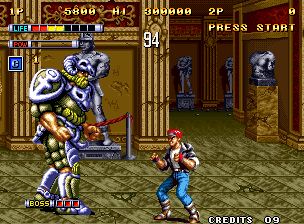
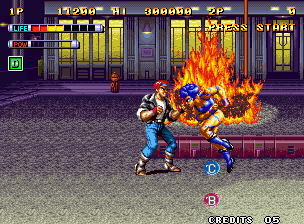
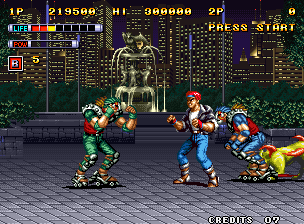
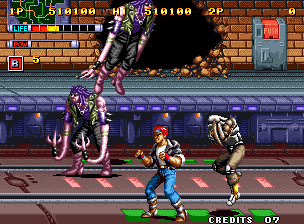
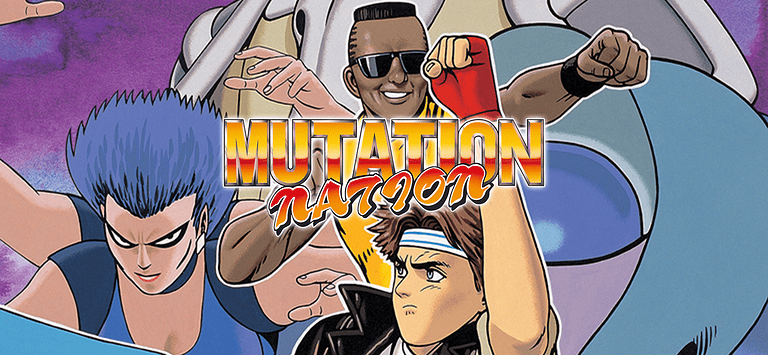
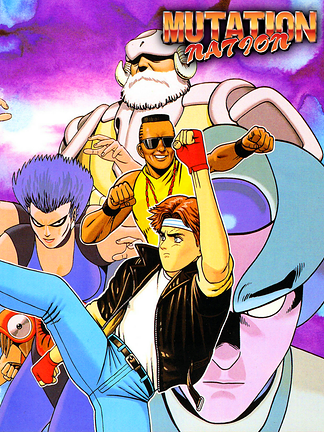
Mutation Nation is a classic arcade beat‑'em‑up that drops you into a gritty, post‑apocalyptic city where two street‑wise heroes—Ricky and Johnny—fight their way through six distinct stages. The game leans on tight combos, jumping attacks, throws and a surprisingly deep special‑move system that lets you grab one of four elemental spheres: Light (A), Fire (B), Lightning (C) or Wind (D). Each sphere triggers a screen‑filling super attack, while neutral spheres restore health and boost your super‑attack count; if you run out, you can even sacrifice a bit of life to unleash a frantic flurry. Enemies range from mutated townsfolk in the Slum to mechanical monstrosities, with sub‑bosses peppered throughout and a full boss at the end of every level. Critics at the time praised the crisp sprites, punchy sound and the innovative sphere mechanic, even as they noted occasional control lag and a tendency toward repetitive brawling.
Storyline
Mutation Nation is set in the year 2050 after a mad scientist’s illegal bio‑experiments are shut down and his lab explodes, leaving the researcher vanished. New structures rise over the abandoned slums, but a rogue genetic virus leaks from the wreckage, turning the tenants into savage mutants.
Two local youths, Ricky Jones and Johnny Hart, return to their hometown after a long absence and are shocked by the chaos. Determined to protect their community, they take up arms against the infected residents and the robotic guardians the scientist left behind, hoping to stop the outbreak before the mutants can spread across the nation.
Edited by Maya Carter
Game Videos
Game Screenshots
Game Artworks
Arcade Machine
- Developers
- SNK
- Machine Style
- Upright
- Control Panel
- Multi-player
- Input Devices
- Joystick · Buttons
- Screen Orientation
- Landscape
- Sound
- Stereo
Multiplayer
- Game modes
- Cooperative · Teams
External Links
You might also like
Mr. Goemon
1986 Platformer