Play Missile Command Online
Game Info
4.1 / 5
45 votes
- Platform
- Arcade
- Genres
- Shooter · Arcade
- Player Perspective
- Side view
- Developers
- Atari
- Publishers
- Sega · Taito · Atari Corporation · Atari
- Release date
- July 1, 1980
Summary
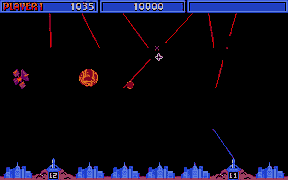
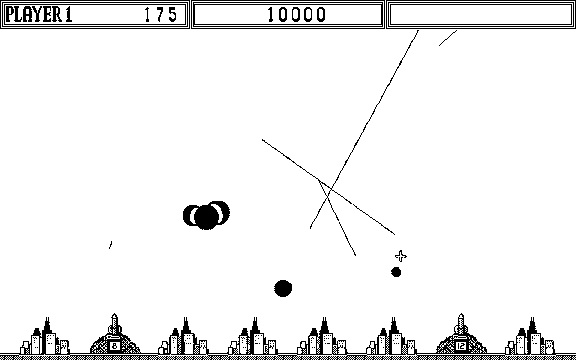
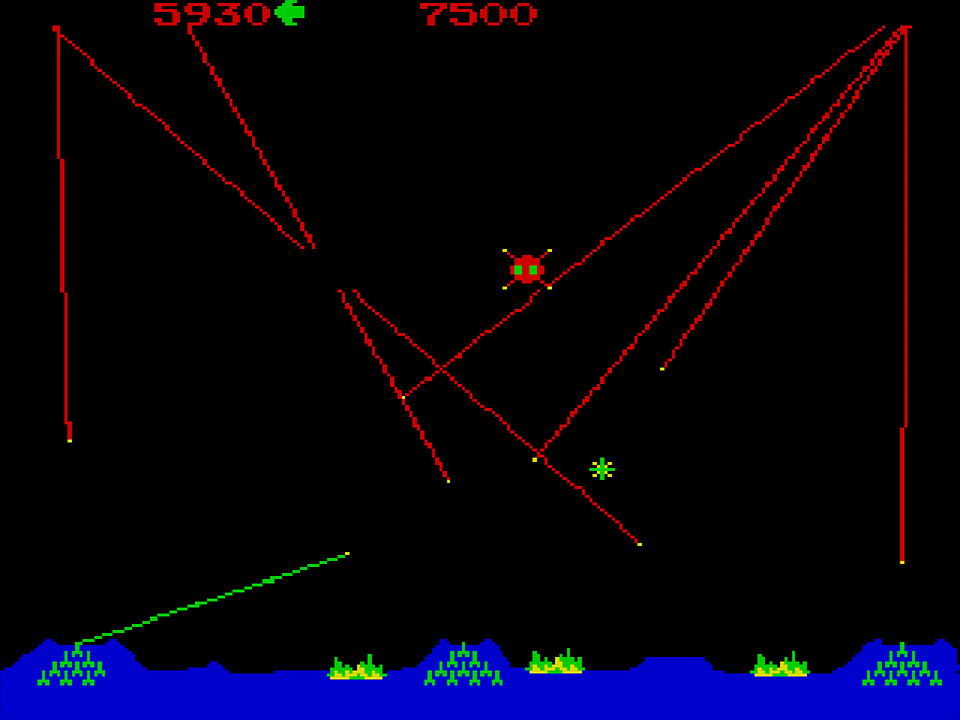
Missile Command drops you into the role of a regional commander tasked with protecting six vulnerable cities from an unending barrage of ballistic missiles. Using a trackball‑driven crosshair, you fire anti‑missile rockets from three separate bases, each stocked with ten missiles, to intercept the threats before they split into multiple warheads.
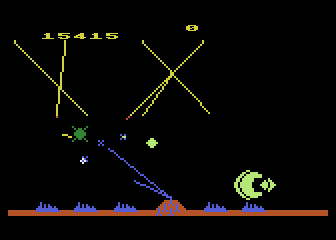
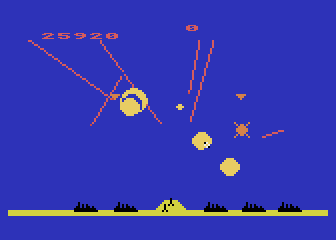
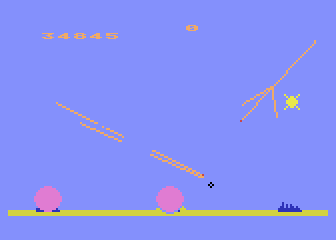
The central battery shoots its missiles at a higher speed, allowing it to take out the smart bombs that appear in later levels. Bomber planes and satellites streak across the sky, launching their own payloads, while smart bombs can dodge imperfectly aimed fire. Each explosion leaves a lingering fireball that will vaporize any enemy missile or craft that wanders into it.
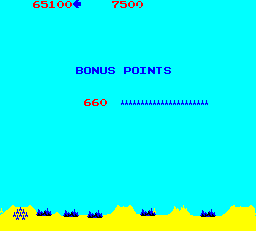
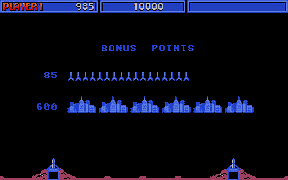
Points are awarded for every missile destroyed, and bonus cities appear at set score intervals, ready to replace any that fall. A scoring multiplier climbs from 1× to 6× every two levels, boosting both target and bonus values. The game ends only when all six cities and any reserves are gone, and the screen solemnly reads “The End.”
Arcade cabinets came in everything from a tabletop model to a massive sit‑down cockpit, and a conversion kit called *Super Missile Attack* let operators re‑skin the machine. The hardware runs on a 6502 CPU with an Atari Pokey sound chip, and the cabinet even featured an extra panel of light indicators that later versions dropped. Its iconic status earned cameo spots in *Terminator 2: Judgment Day* and the credits of *Fast Times at Ridgemont High*.
Storyline
Missile Command drops players into a tense Cold‑War scenario where six American cities face a barrage of intercontinental ballistic missiles. The arcade screen acts like a radar, showing missiles launched from the USSR heading toward the United States, and the player must intercept them before they strike. No explicit plot is provided in the original cabinet, leaving the drama to the player’s imagination. The Atari 2600 version adds a sci‑fi twist in its manual, framing the conflict as a war between two planets—Zardon, the defender, and Krytol, the attacker—though this backstory never appears in the arcade game itself.
Edited by Maya Carter
Game Videos
Game Screenshots
Arcade Machine
- Developers
- Atari
- Machine Style
- Cocktail Table · Cockpit · Mini Upright · Upright
- Control Panel
- Single-player
- Input Devices
- Buttons · Trackball
- Screen Orientation
- Landscape
- Sound
- Mono
Multiplayer
- Multiplayer setup
- Hot Seat
External Links
You might also like
Sky Skipper
1981 Arcade