Play Kangaroo Online
Game Info
2.8 / 5
6 votes
- Platform
- Arcade
- Genres
- Platformer · Arcade
- Player Perspective
- Side view
- Developers
- Sun Electronics
- Publishers
- Sun Electronics · Atari Corporation · Atari Program Exchange
- Release date
- June 1, 1982
Summary
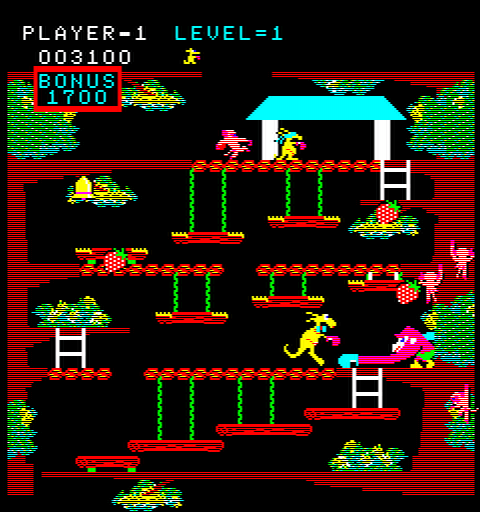
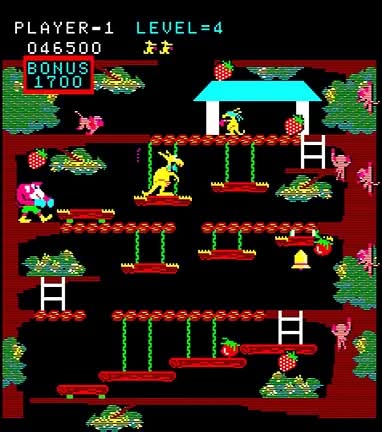
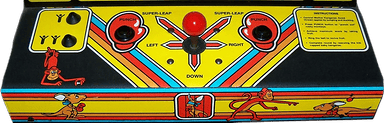
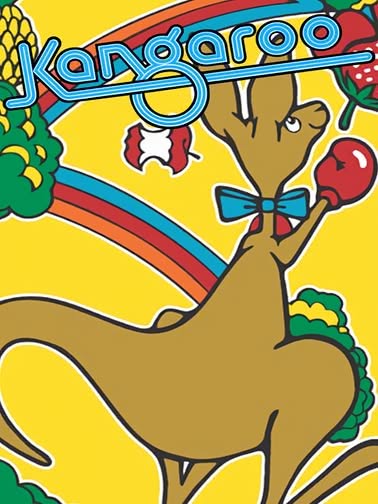
Kangaroo is a quirky 1980s arcade platformer where you guide a boxing‑glove‑wearing mother kangaroo using a joystick that doubles as a jump lever. Pushing the stick up or diagonally launches her into the air, while the standard directions let you climb ladders and hop between platforms.
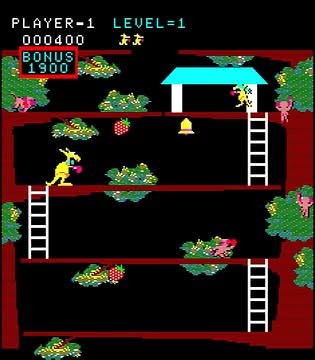
Monkeys hurl apples from above; an overhand throw forces a quick duck, an underhand toss demands a hop over the projectile. You can punch any monkey you meet, and a hulking ape occasionally appears to snatch your gloves—punch him back to keep fighting. Apple cores drop as extra hazards, but fruit and vegetables litter the stages, and ringing a bell spawns higher‑value produce for extra points.
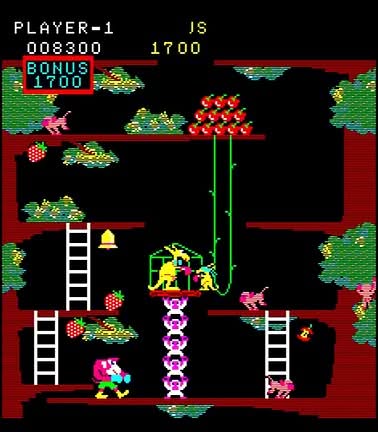
The game offers four distinct stages. The first three feature a straightforward ladder‑and‑platform climb, while the third adds a stacked monkey cage that must be battered down before you can ascend. The fourth mixes odd floor connections and erratic apple throws, and each round speeds up after you complete the cycle.
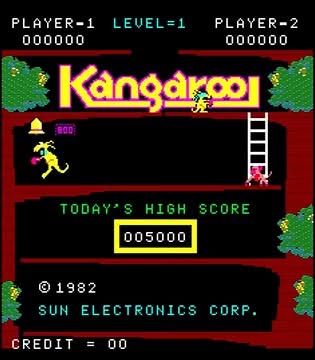
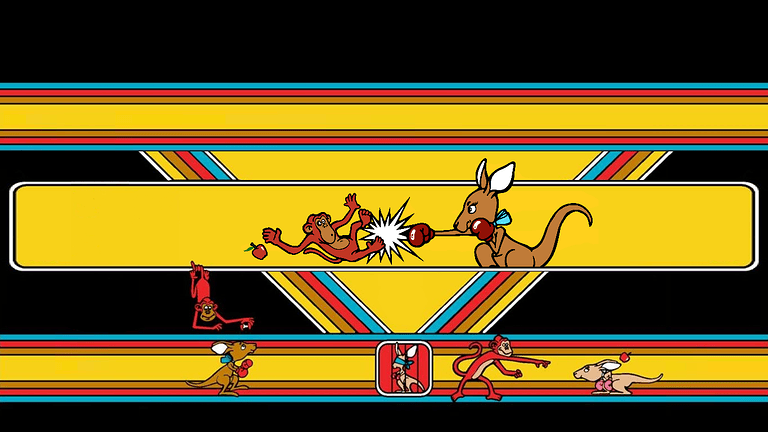
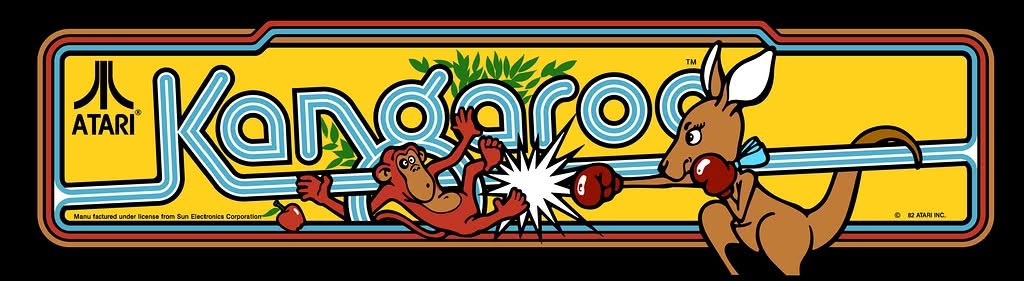
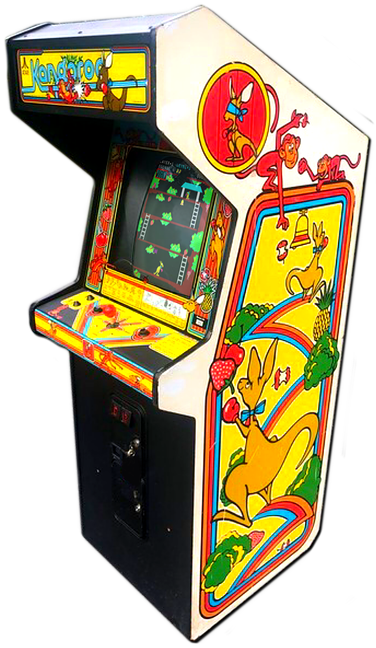
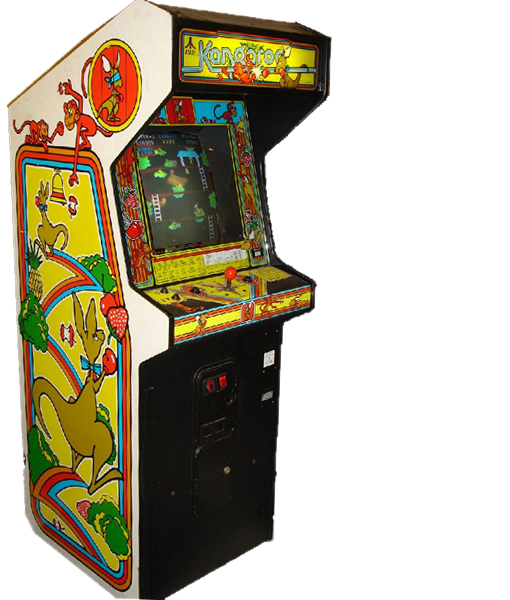
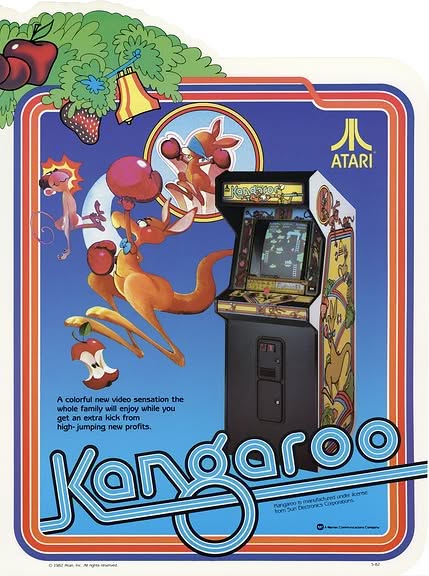
Audio includes a blend of classical and folk tunes—Beethoven’s “Turkish March” at start, Meacham’s “American Patrol” during play, and “Oh! Susanna” on level completion—while the cabinet’s white‑background art shows a cartoonish action shot. Notably, the graphics suffer brief sprite flickers, a hallmark of the era’s hardware.
After decades in the arcades, Kangaroo resurfaced in Hamster Corporation’s Arcade Archives collection for Switch and PS4 in 2020, letting a new generation experience its odd charm.
Storyline
In the arcade platformer Kangaroo, you control a boxing‑glove‑wearing mother kangaroo determined to save her joey from a gang of mischievous monkeys. The game’s stages are set high in the treetops; three of the four levels start on the bottom floor and require the player to climb ladders, jump onto moving platforms and leap across gaps to reach the top where the baby is held. The hostile monkeys are pink, toss apples, and must be punched or dodged. On the third level the joey is trapped in a cage suspended by the monkeys; each successful punch lowers the cage, letting the mother climb higher before it is raised again. The rescue ends with Kid Kangaroo shouting “MOM” as the tune “Oh! Susanna” plays.
Edited by Maya Carter
Game Screenshots
Game Artworks
Arcade Machine
- Developers
- Atari
- Machine Style
- Upright
- Control Panel
- Single-player
- Input Devices
- Joystick · Buttons
- Screen Orientation
- Portrait
- Sound
- Mono
Multiplayer
- Multiplayer setup
- Hot Seat
External Links
You might also like
Bubble Symphony
1994 Platformer