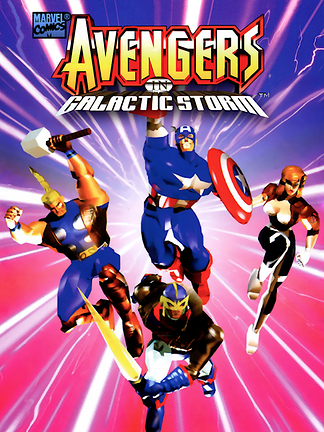
Play Avengers in Galactic Storm Online
Game Info
2.8 / 5
- Platform
- Arcade
- Genres
- Fighting · Arcade
- Player Perspective
- Third person · Side view
- Developers
- Data East
- Publishers
- Data East
- Release date
- January 1, 1996
Summary
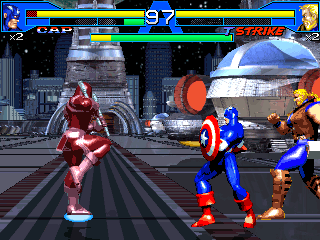
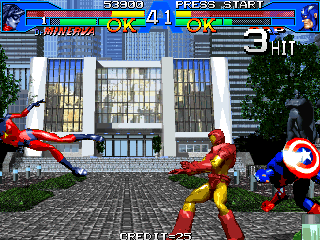
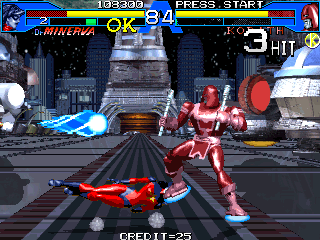
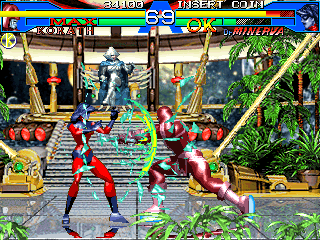
Avengers in Galactic Storm is a space‑themed 2‑D fighter that lets you pick an Avenger or a Kree hero and pair them with a comic‑book “assistant” who can be summoned for a quick strike. The assist system was a first for modern fighters – each character has a dedicated helper that appears when its assistant bar fills, and two full power bars let teammates unleash a tandem desperation move that feels like a precursor to the tag‑team super moves of later Marvel vs. Capcom titles.
The arcade cabinet runs on Data East’s MLC (Mother‑Less Cassette) board, complete with a power‑LED and a test button that brings up a menu almost identical to the CP System II layout, the same hardware that also powered Backfire! and Skull Fang. You can dive into a single‑player story mode that follows the Operation: Galactic Storm comic arc, choosing whether the second slot is a friend or a foe, or jump straight into VS mode for classic head‑to‑head bouts.
Although it never left the arcade, the game resurfaced in a 2021 Arcade1Up collection alongside X‑Men and Captain America, reminding us why its helper mechanic still feels fresh despite the mixed reviews it earned at the time.
Storyline
Avengers in Galactic Storm draws its entire plot and character roster straight from the Operation: Galactic Storm comic arc, turning the epic crossover into an arcade brawler. Every playable hero and their assistant is voiced by the same two talent duo—Jon St. John and Lani Minella—giving the game a consistent vocal flavor.
In Story Mode, players must defeat a sequence of opponents in the exact order they appear in the comic storyline. Between fights you can choose a "Friend (Team Member)" or a "Foe (Opponent)" to act as a Mid‑Game Participant, adding a strategic twist. The mode also supports a second player, allowing friends to team up and push through the narrative together.
Edited by Maya Carter
Game Videos
Game Screenshots
Arcade Machine
- Developers
- Data East
- Machine Style
- Upright
- Control Panel
- Multi-player
- Input Devices
- Joystick · Buttons
- Screen Orientation
- Landscape
- Sound
- Mono
Multiplayer
- Game modes
- Cooperative
External Links
You might also like
Wizard Fire
1992 Beat 'em Up